Zero-Knowledge Proofs
Zero-knowledge proofs from the foundations up: interactive proofs and the sum-check protocol, GKR, pairing-based SNARKs, transparent and universal systems, STARKs, and recursion with Halo.
An equally large part of the category is what goes wrong: a technical classification of soundness and completeness bugs, a documented record of ZK exploits in production, and the specific failures seen in cross-chain bridges.
39 posts
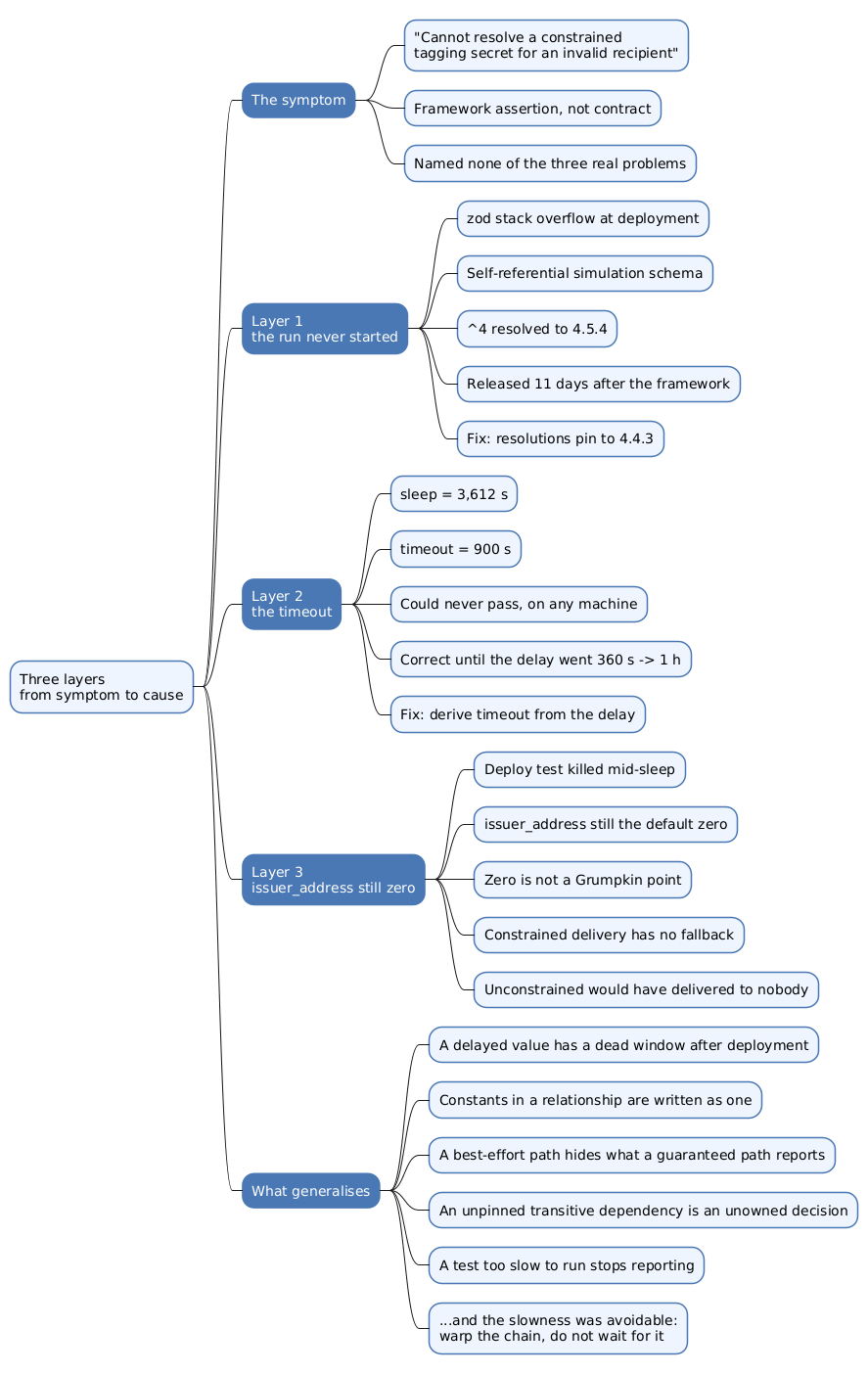
An Aztec test failed on a tagging-secret assertion. The obvious explanation fitted every symptom and was wrong: the chain had never advanced at all.
2026, Sep 23 —
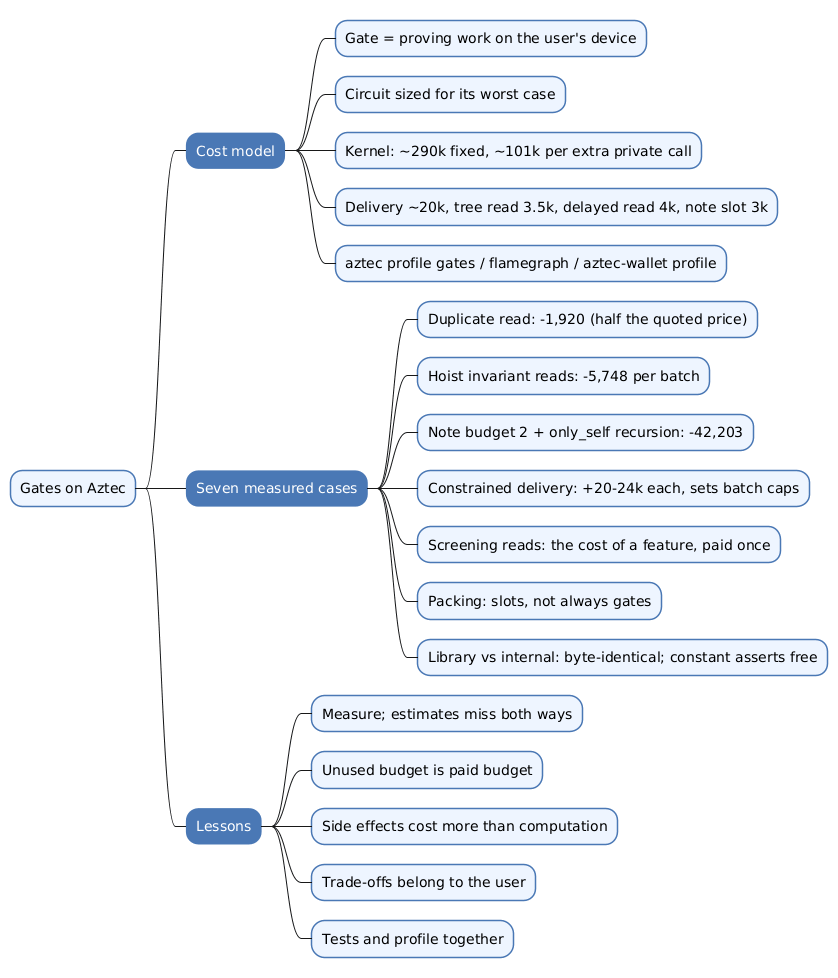
On Aztec a private function's gate count is proving time on the user's device: kernel overhead, budgets, deliveries, reads, and seven measured optimisations.
2026, Sep 18 —
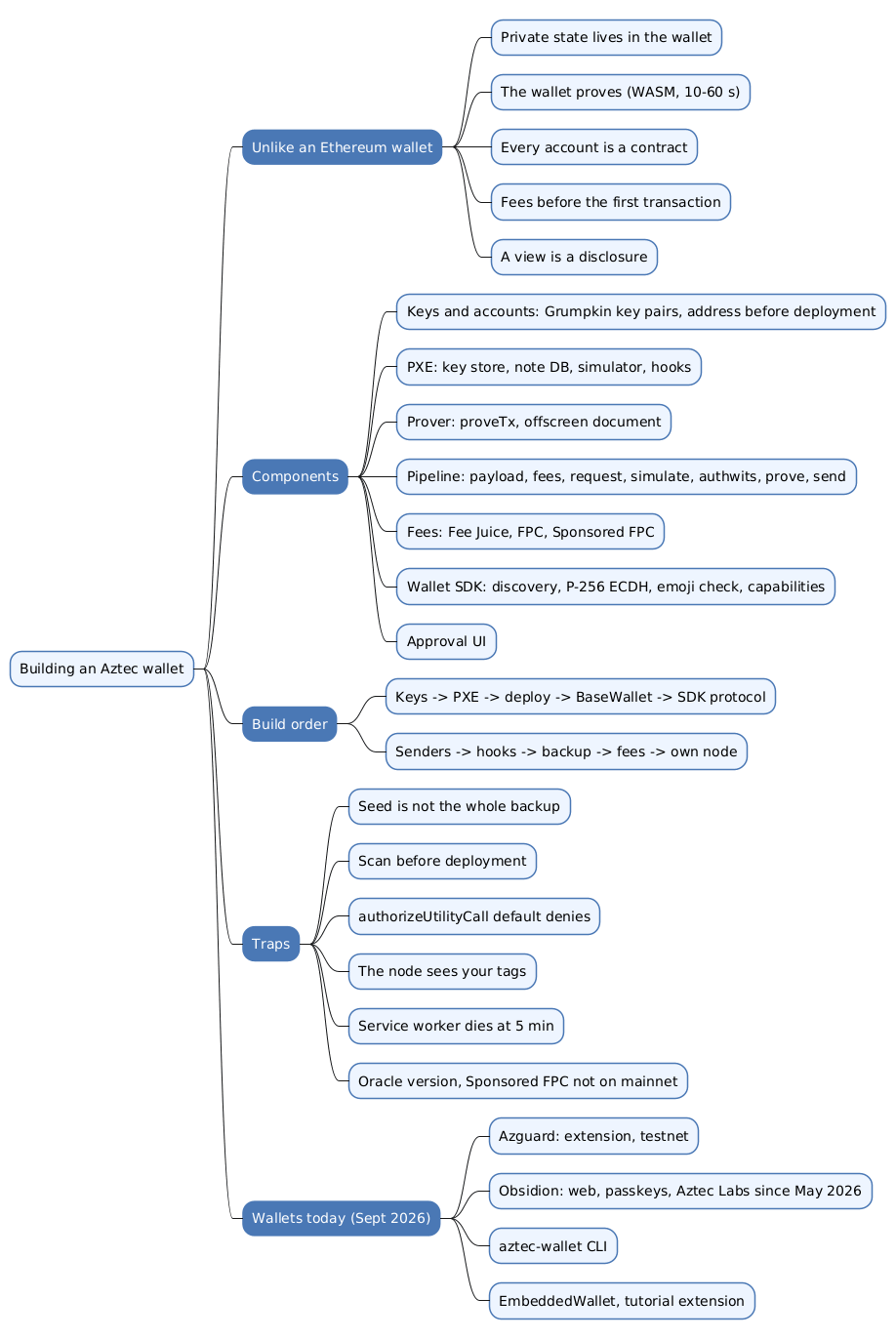
An Aztec wallet is a key store, a private-state database, a prover and a dApp gateway in one: components, build order, traps, and the wallets that exist today.
2026, Sep 17 —
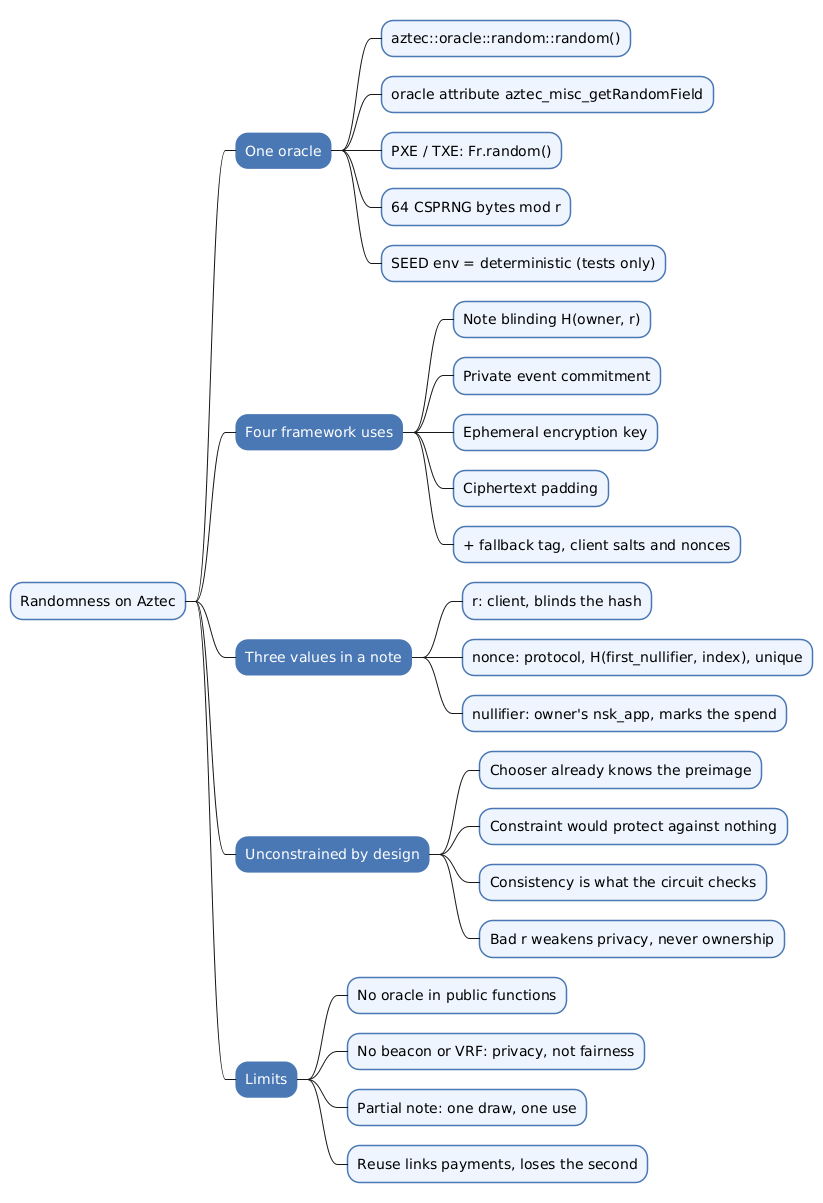
Every random value in an Aztec contract comes from one unconstrained oracle backed by the client's CSPRNG: what it blinds, its limits, and why that is safe.
2026, Sep 17 —
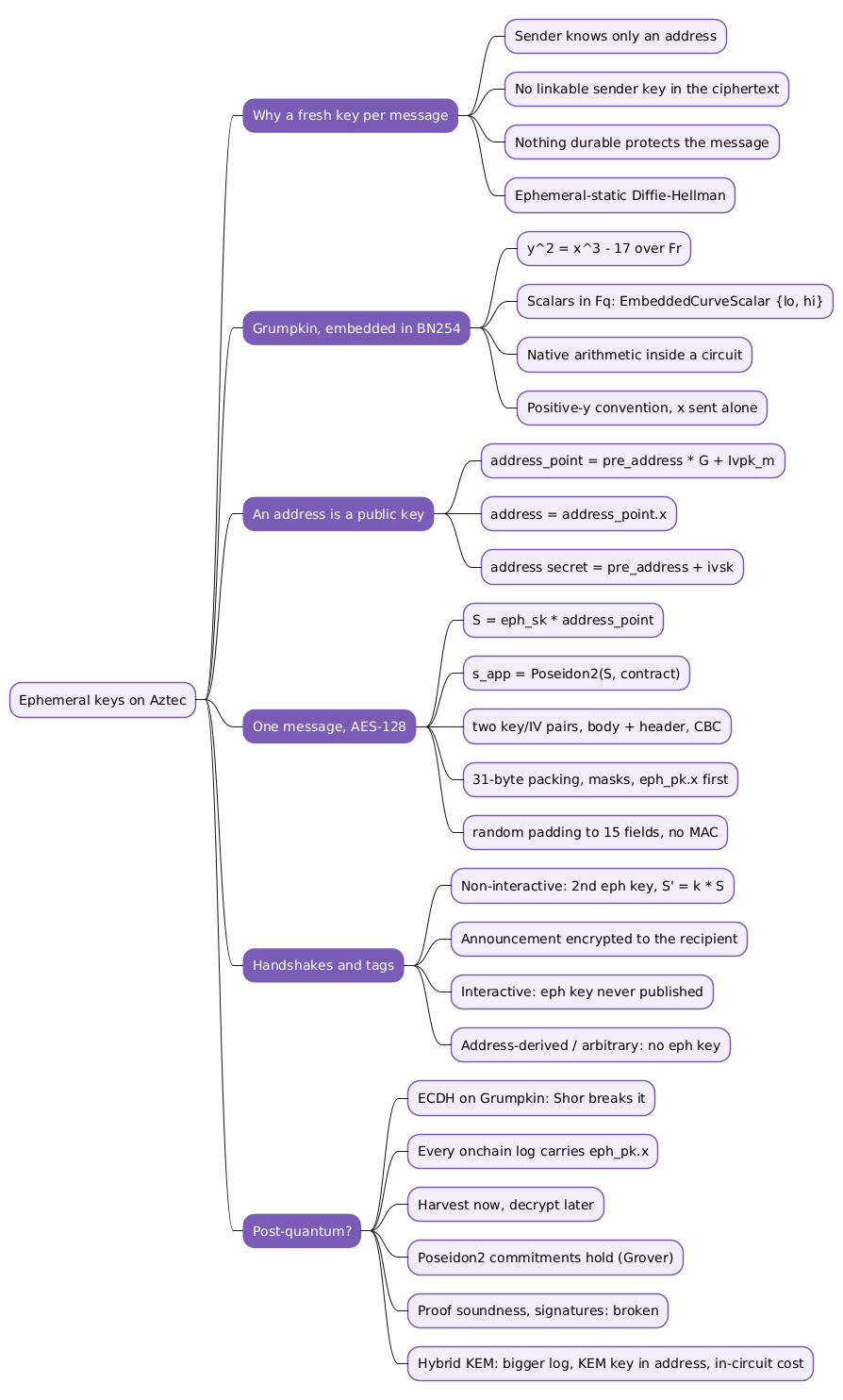
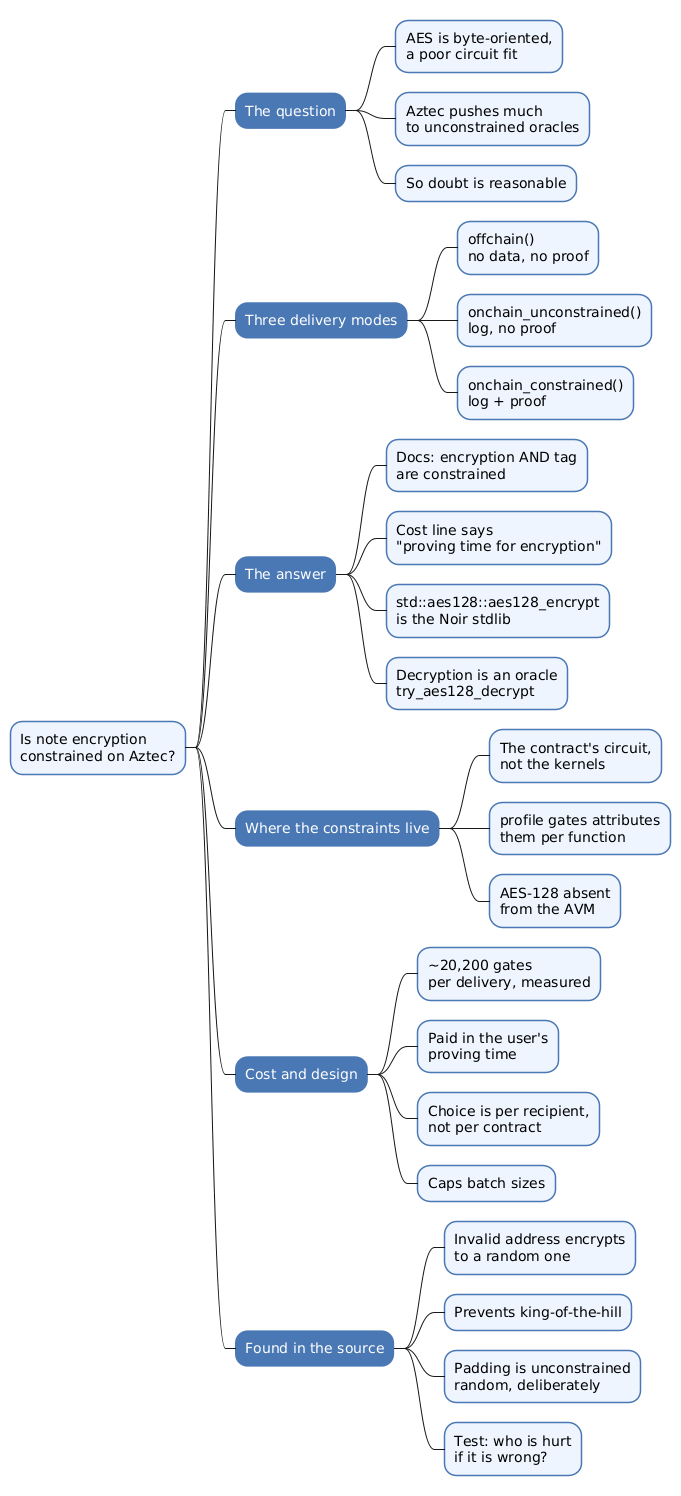
Every private note on Aztec is encrypted with a one-shot ECDH key on Grumpkin: how it is made, what the ciphertext holds, and why it is not post-quantum.
2026, Sep 17 —
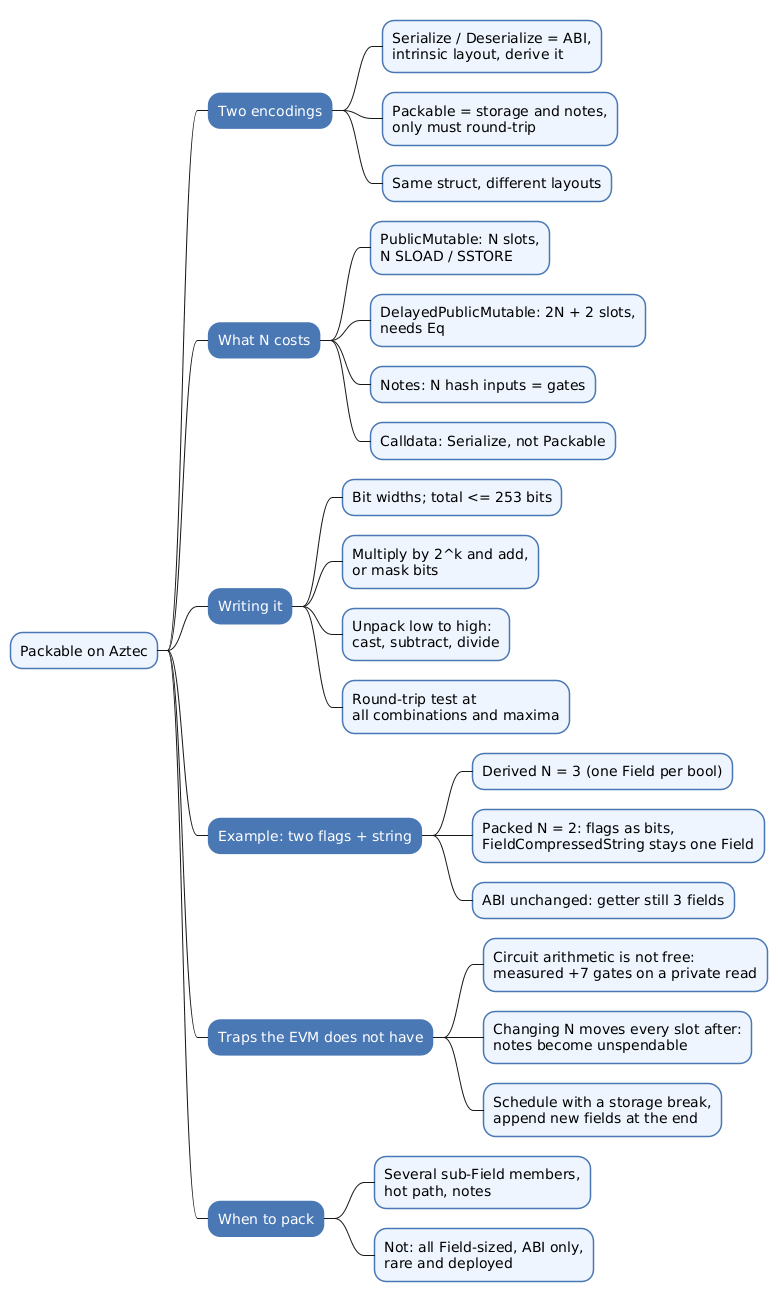
A derived Packable spends one Field per member. Packing two bools into one saves a slot or a note-hash input, can cost gates, and moves every slot after it.
2026, Sep 16 —
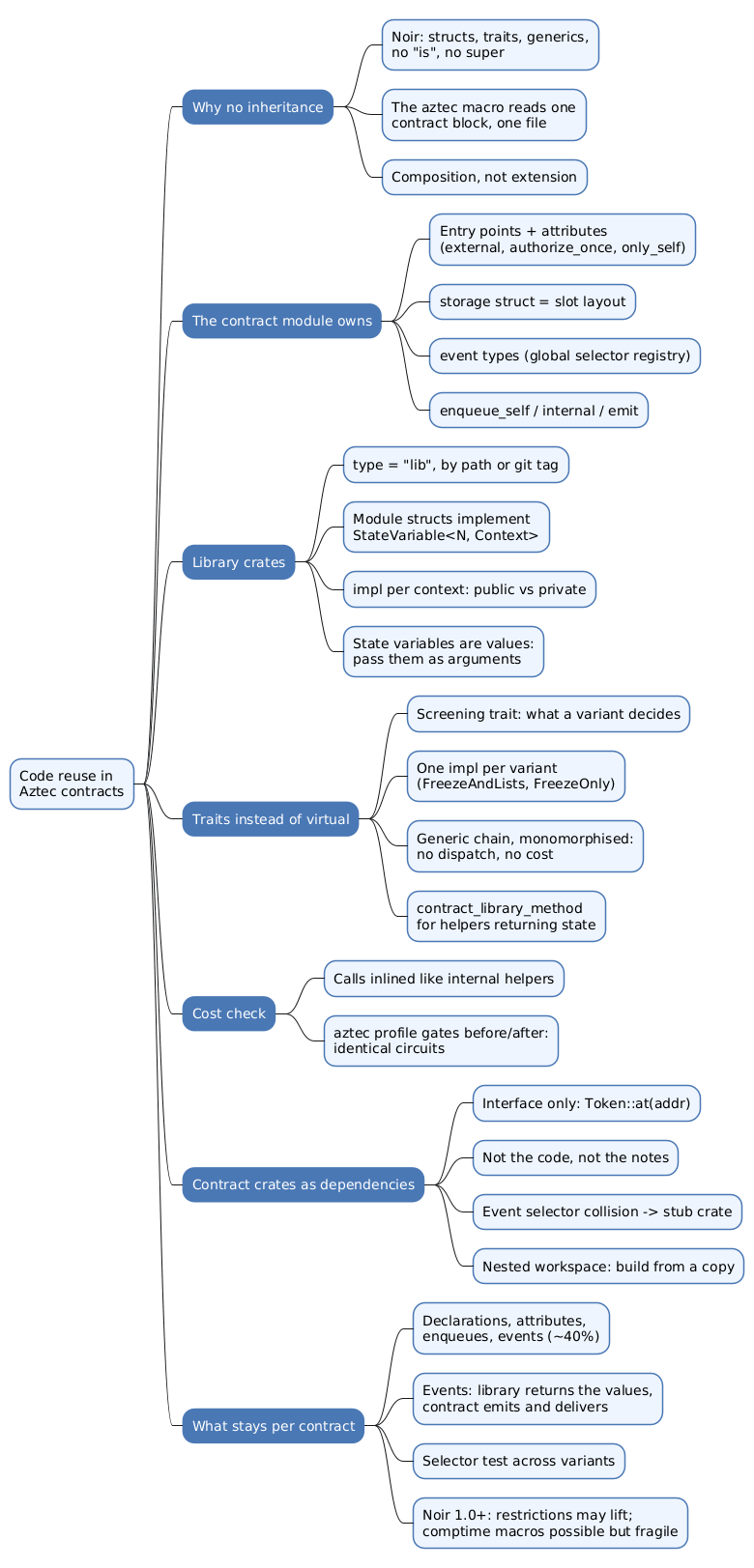
Aztec contracts cannot inherit. What a contract module must own, what a Noir library can hold, and how a trait replaces virtual methods, on a two-variant token.
2026, Sep 15 —
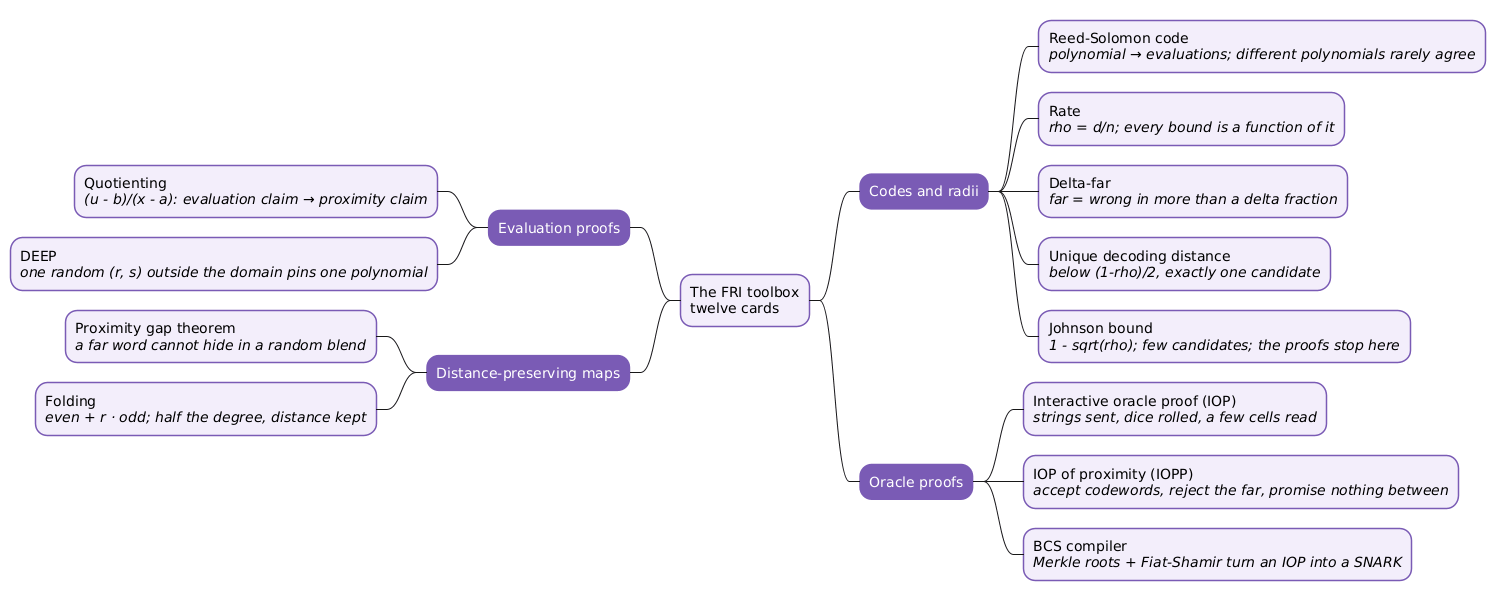
Twelve flashcards for the toolbox FRI is built from: Reed-Solomon codes, rate, the Johnson bound, IOPs of proximity, quotienting, DEEP, proximity gaps and folding.
2026, Sep 14 —
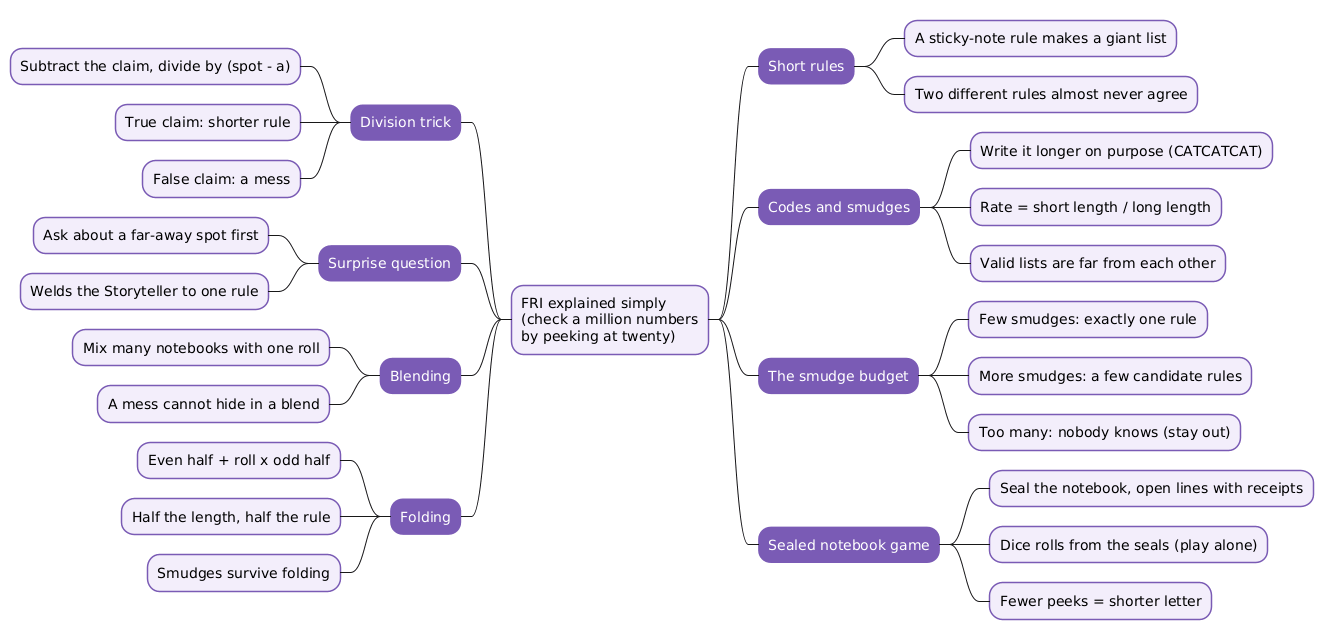
A plain-language guide to FRI and proximity proofs. Secret rules, smudged lists, sealed notebooks, a division trick and paper folding, with worked examples.
2026, Sep 14 —
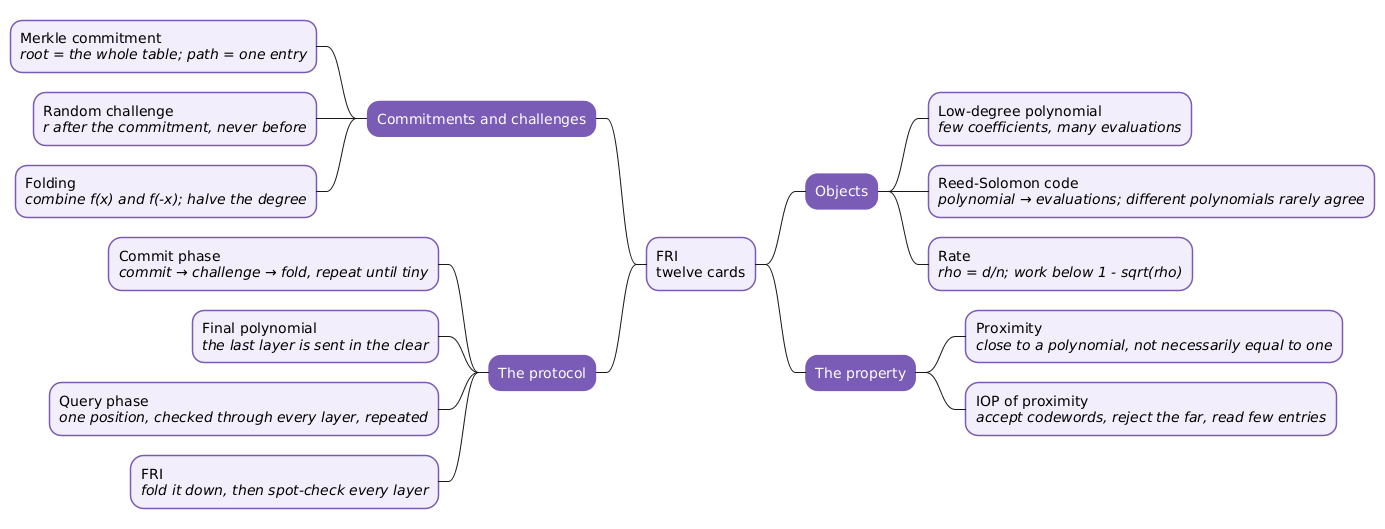
Twelve flashcards for the FRI protocol: low-degree polynomials, Reed-Solomon codes, proximity, Merkle commitments, folding, the commit and query phases.
2026, Sep 14 —
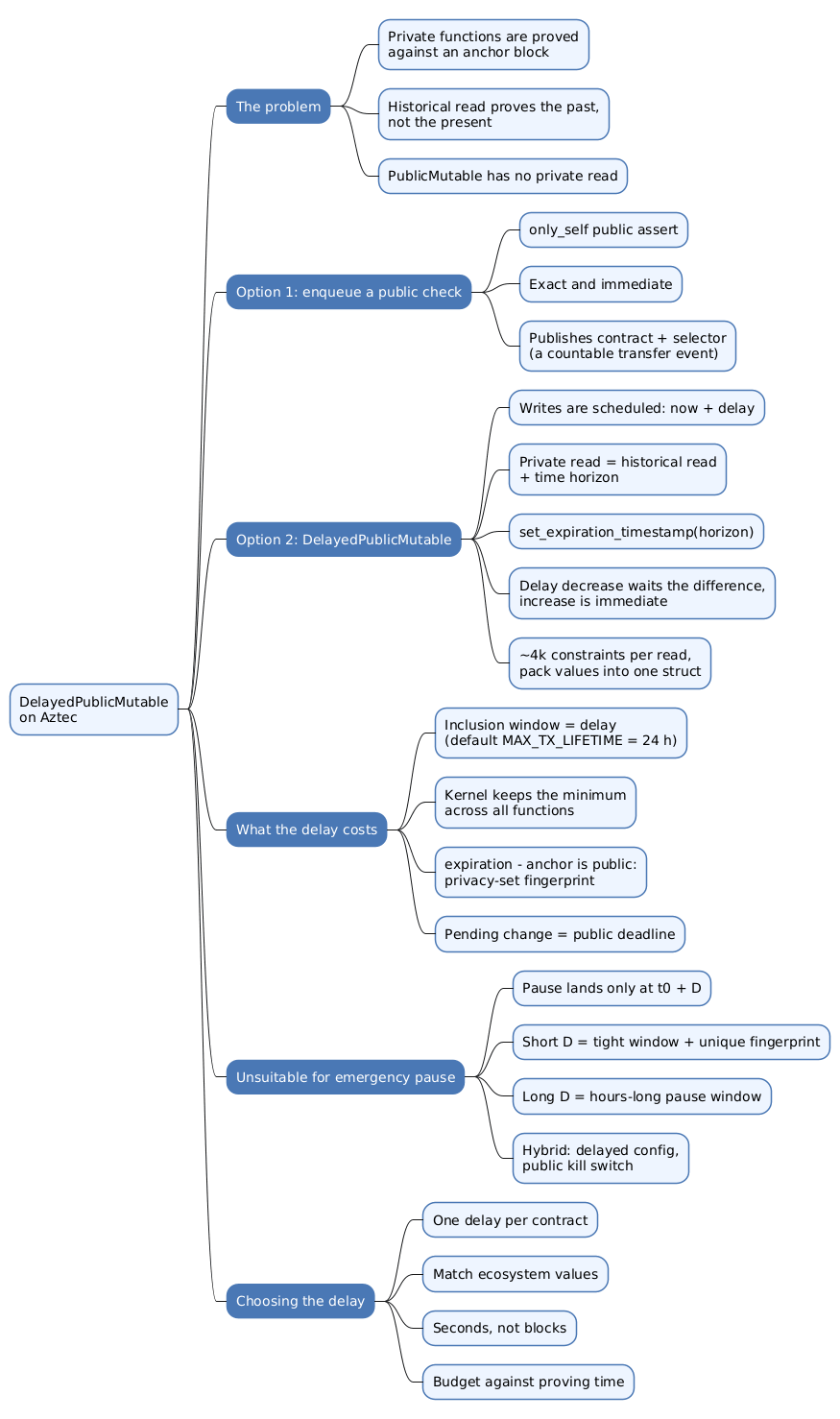
A private Aztec function cannot read a public flag. DelayedPublicMutable allows it, at the price of a delay that also caps how long the transaction stays valid.
2026, Sep 14 —
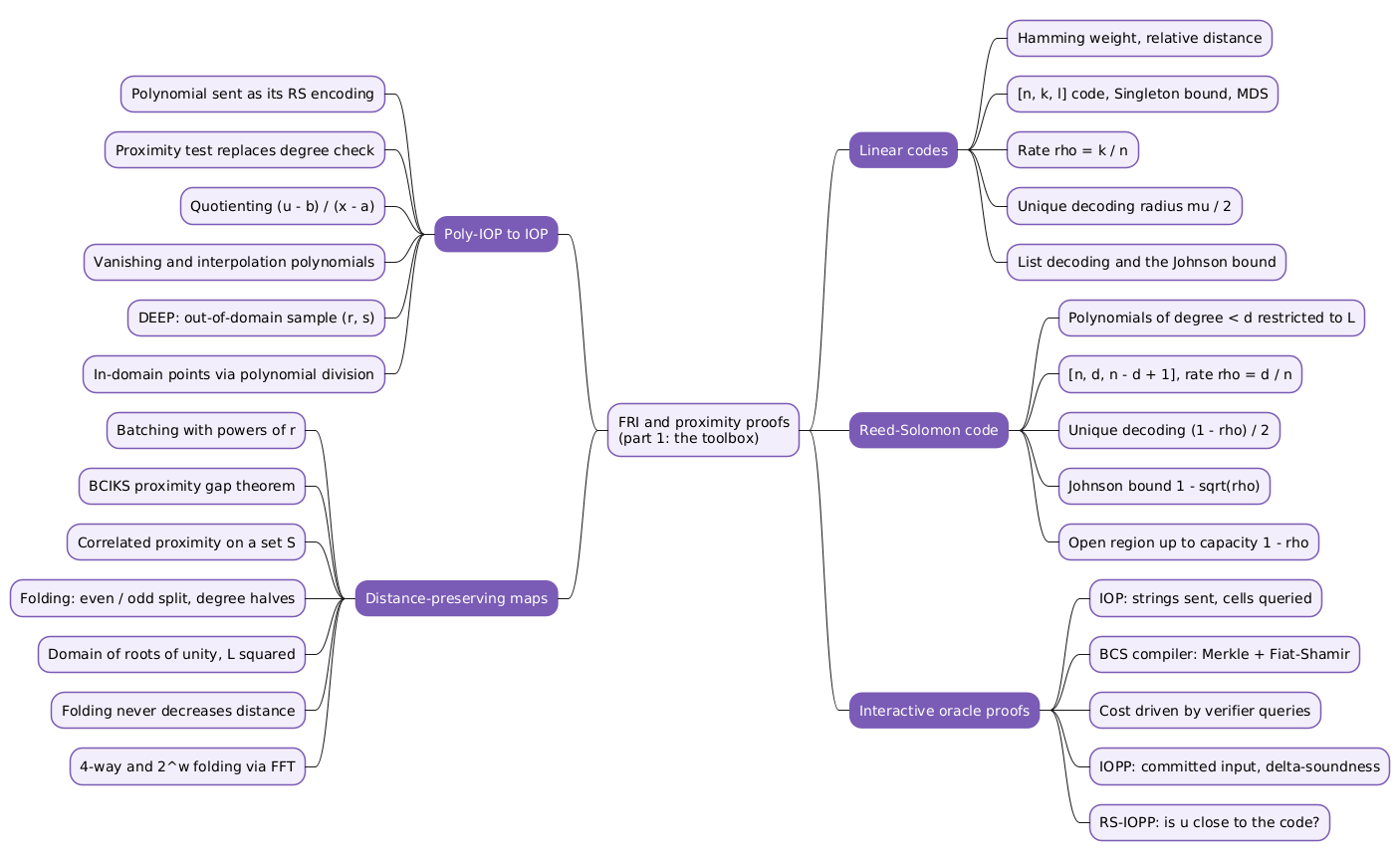
The toolbox behind FRI: linear codes and the Johnson bound, IOPs and the BCS compiler, quotienting with a DEEP sample, proximity gaps and folding.
2026, Sep 11 —
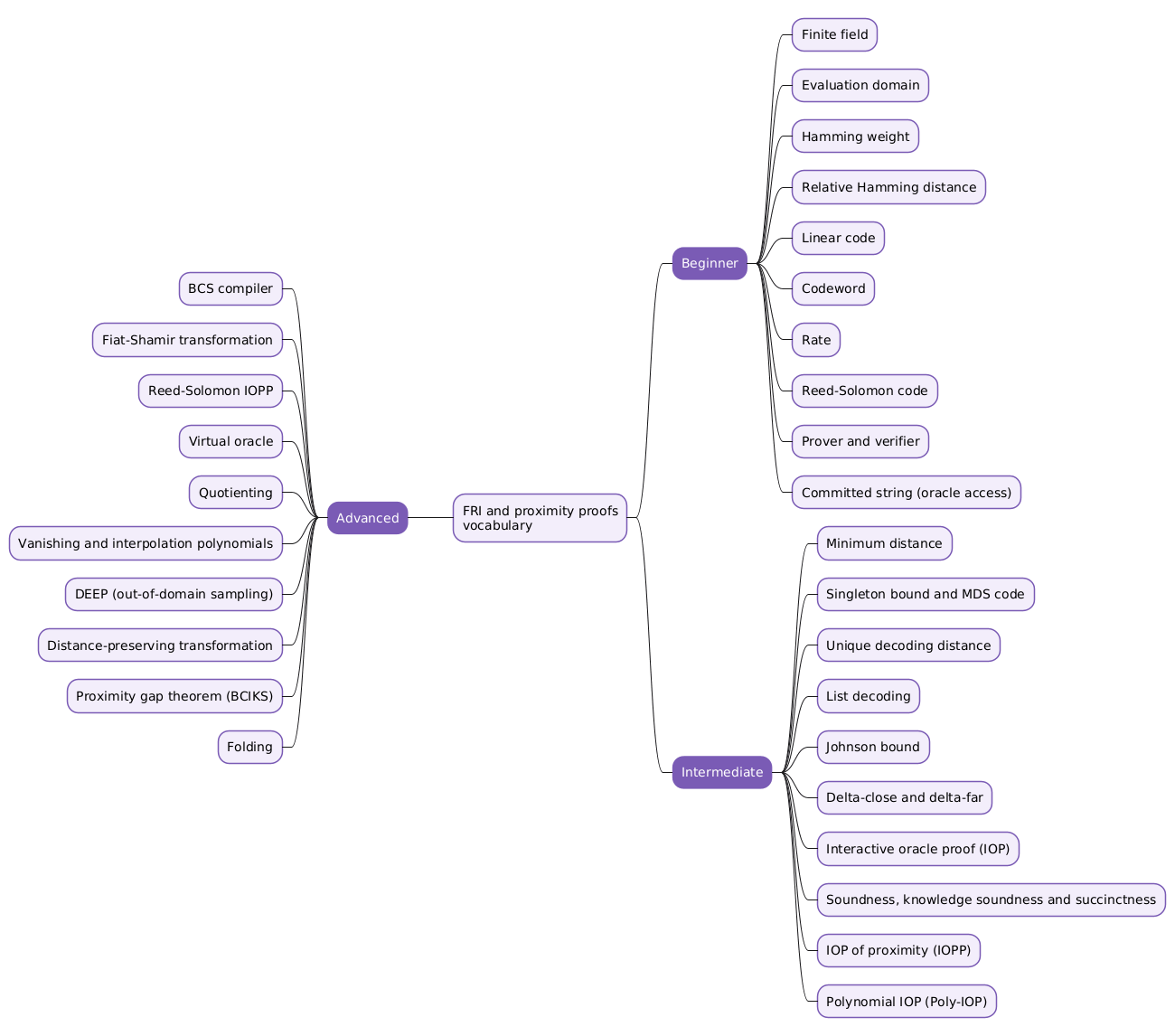
A layered glossary of FRI and proximity proofs. Thirty terms, from Hamming distance and Reed-Solomon codes to IOPPs, quotienting, DEEP and folding.
2026, Sep 11 —

Aztec's ERC equivalents share one design: a private note balance and a public balance per account, transfers named by domain, authwits instead of approve.
2026, Sep 11 —

AIP-20 gives each account a private note balance and a public one, swaps approve for authwits and reverts on shortfall. ERC-7984 hides amounts, never reverts.
2026, Sep 11 —
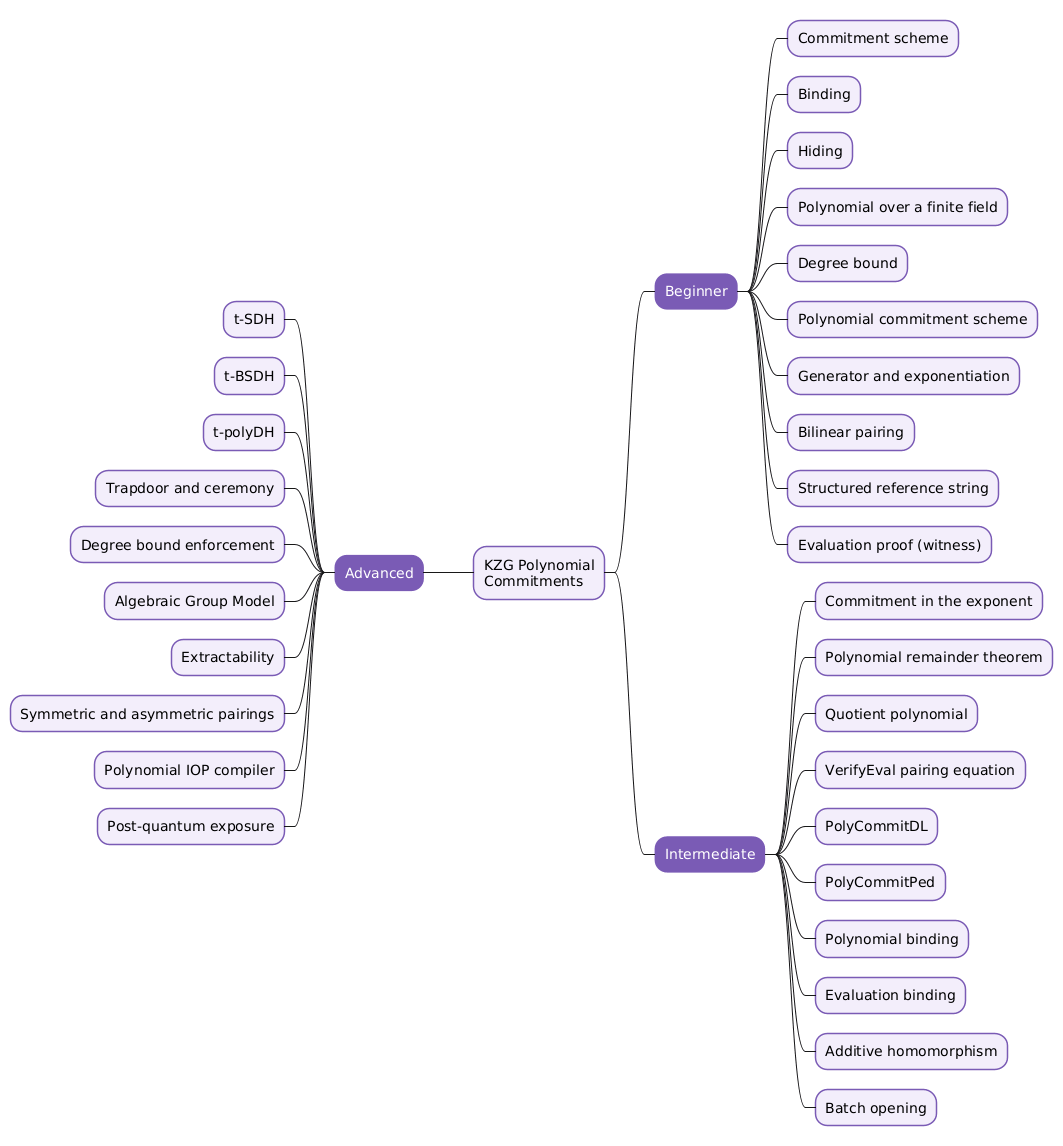
A layered glossary of KZG polynomial commitments. Thirty terms and their formulas, from binding and hiding to the quotient polynomial, t-SDH and degree bounds.
2026, Sep 09 —

A private function cannot read the price it needs. Partial notes split a note into a private half that fixes the payee and a public half that fixes the amount.
2026, Sep 09 —

Aztec has no EOAs and no protocol signature scheme, so account validation is proved on the user's device. What that changes against ERC-4337, and what it costs.
2026, Sep 09 —

Aztec runs private functions on the user's device and public ones on the sequencer. Notes, nullifiers, what a transaction still leaks, and four rival designs.
2026, Sep 08 —
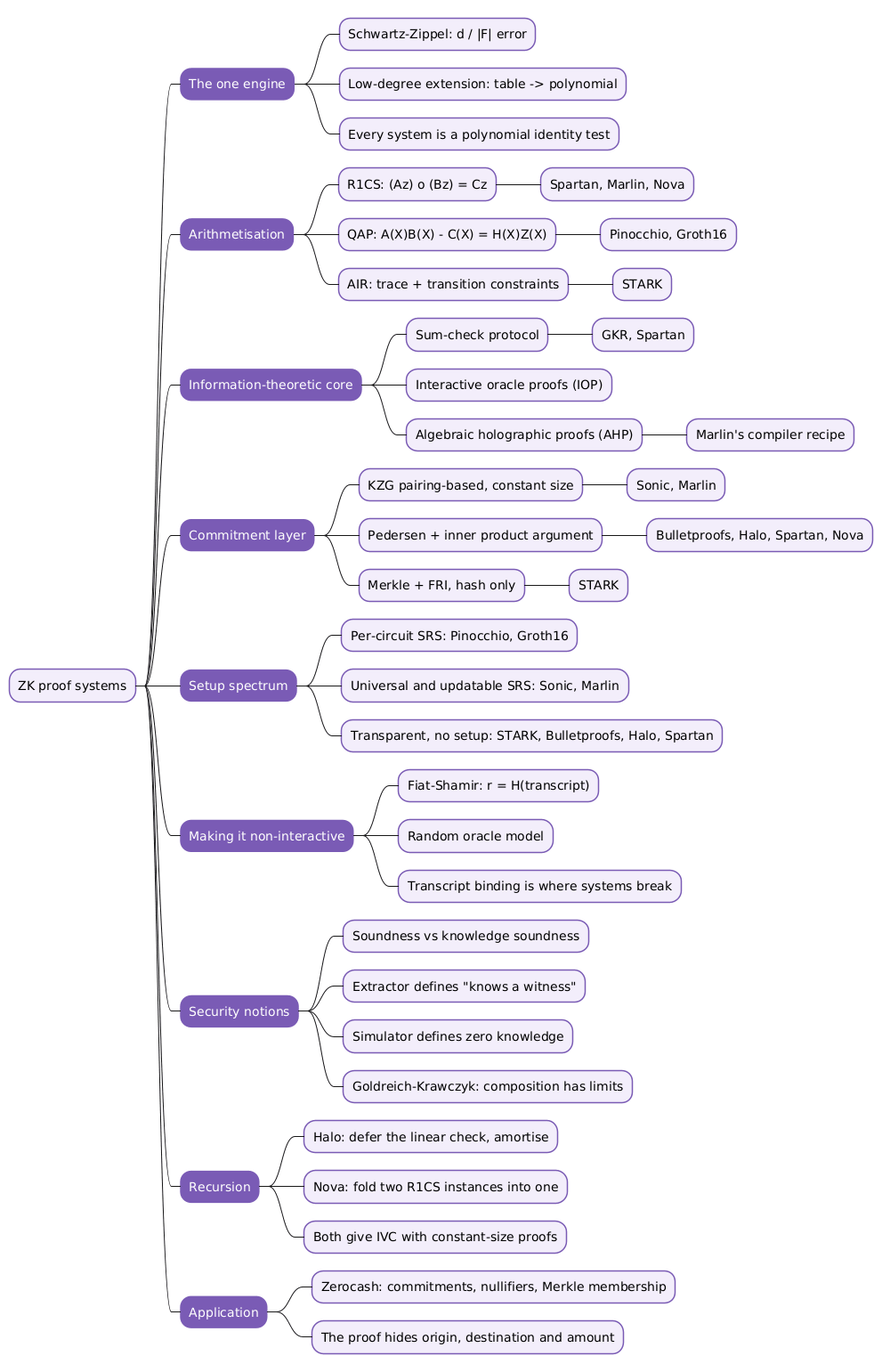
A study guide to the foundational zero-knowledge proof papers. Fifteen technical concepts and fifteen formulas that recur across GKR, Pinocchio, Groth16, Bulletproofs, STARKs, Sonic, Marlin, Spartan, Halo, Nova and Zerocash.
2026, Jul 28 —
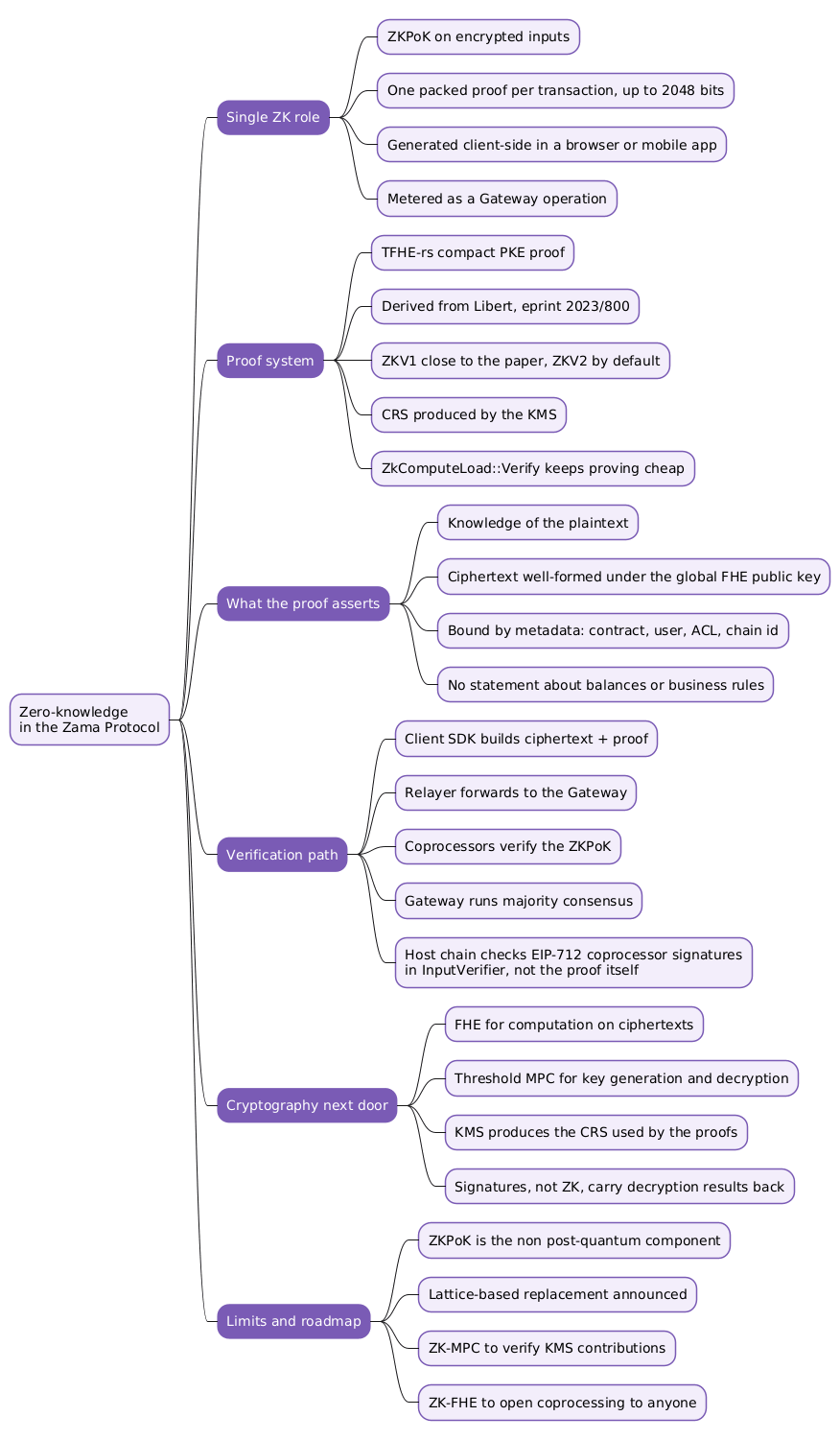
How the Zama Confidential Blockchain Protocol uses zero-knowledge proofs of knowledge on encrypted inputs, which proof system TFHE-rs relies on, where the proof is verified, and why the calldata inputProof holds signatures rather than the proof.
2026, Jul 24 —
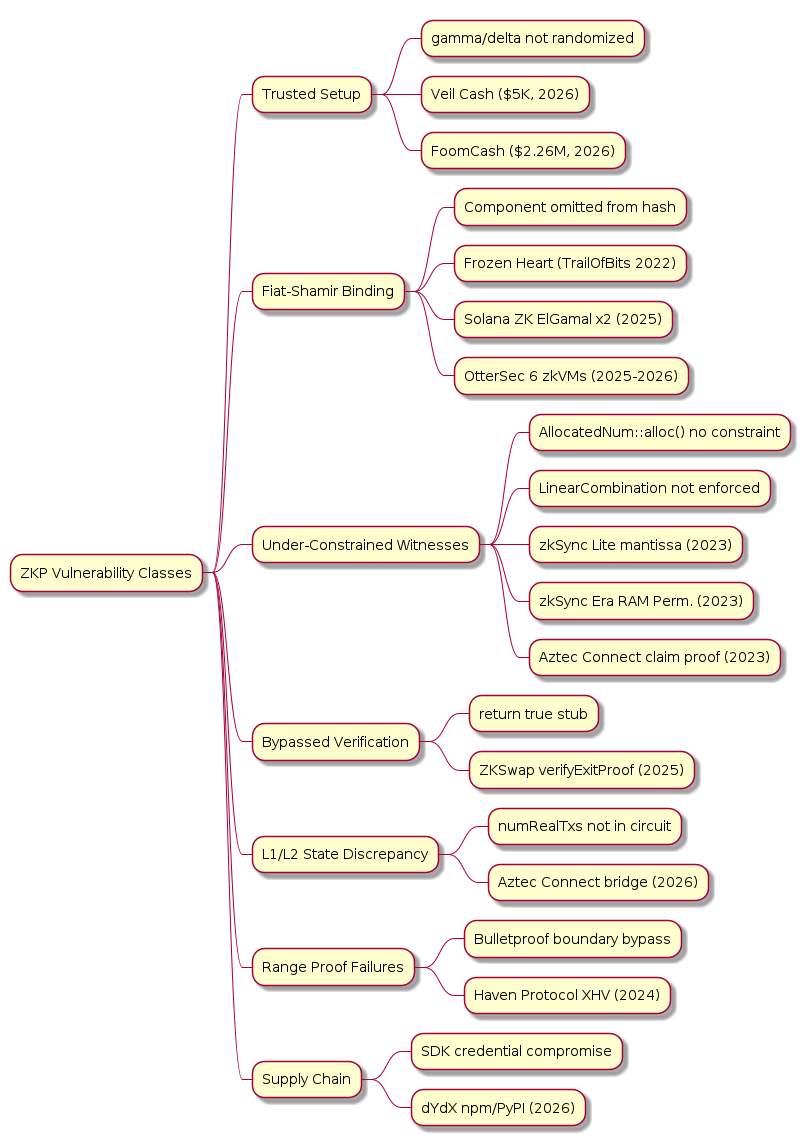
A technical classification of zero-knowledge proof vulnerabilities covering trusted setup failures, Fiat-Shamir binding errors, under-constrained witnesses, verification bypasses, field arithmetic wraparound and protocol boundary gaps.
2026, Jun 19 —
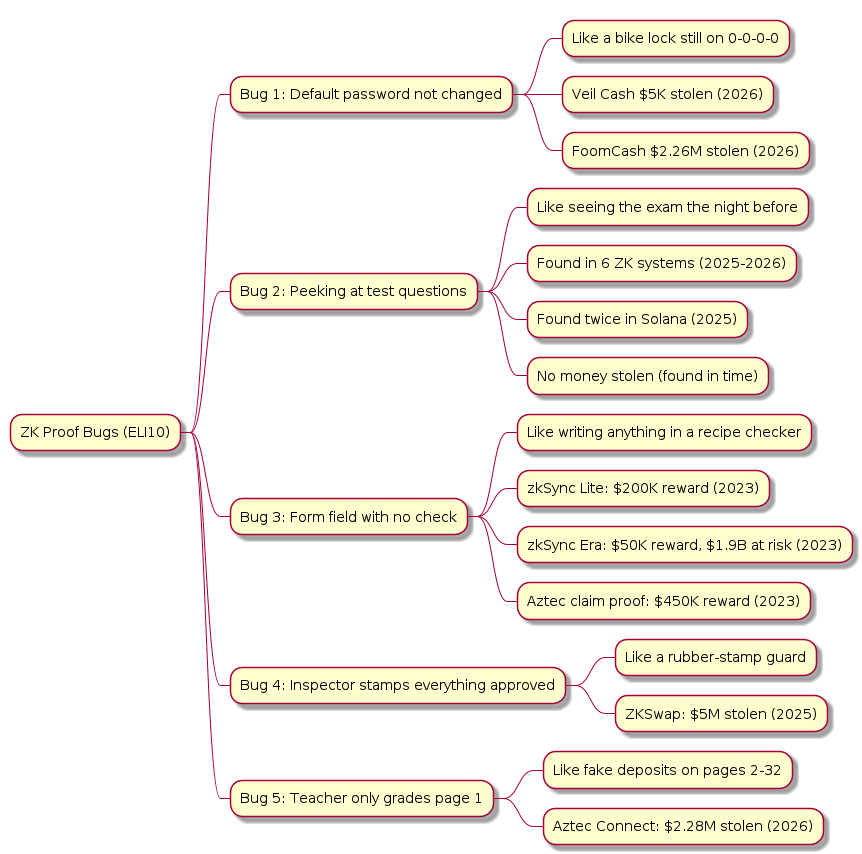
A simple guide to the main ways zero-knowledge proof systems have been broken, explained with everyday analogies about magic locks, bakers, and inspectors.
2026, Jun 19 —
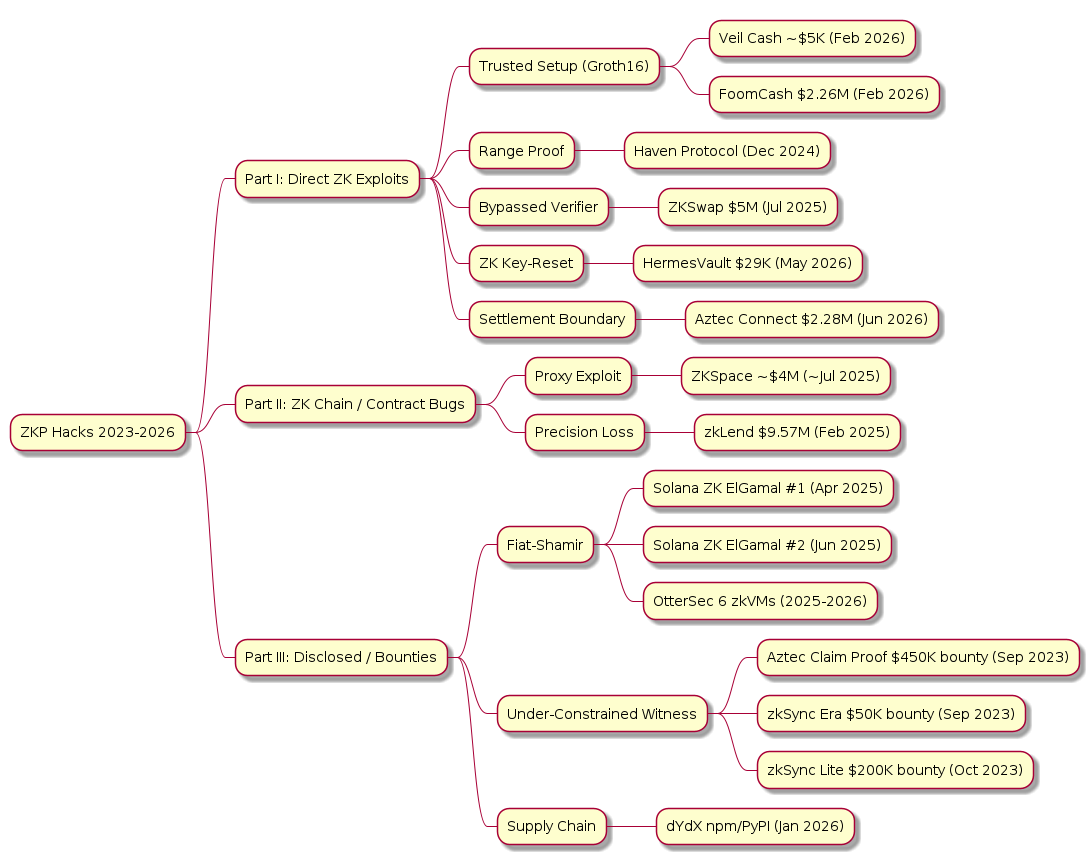
A chronological record of confirmed hacks, disclosed vulnerabilities, and bug bounties in zero-knowledge proof protocols from 2023 to 2026, with technical root cause analysis for each incident.
2026, Jun 19 —
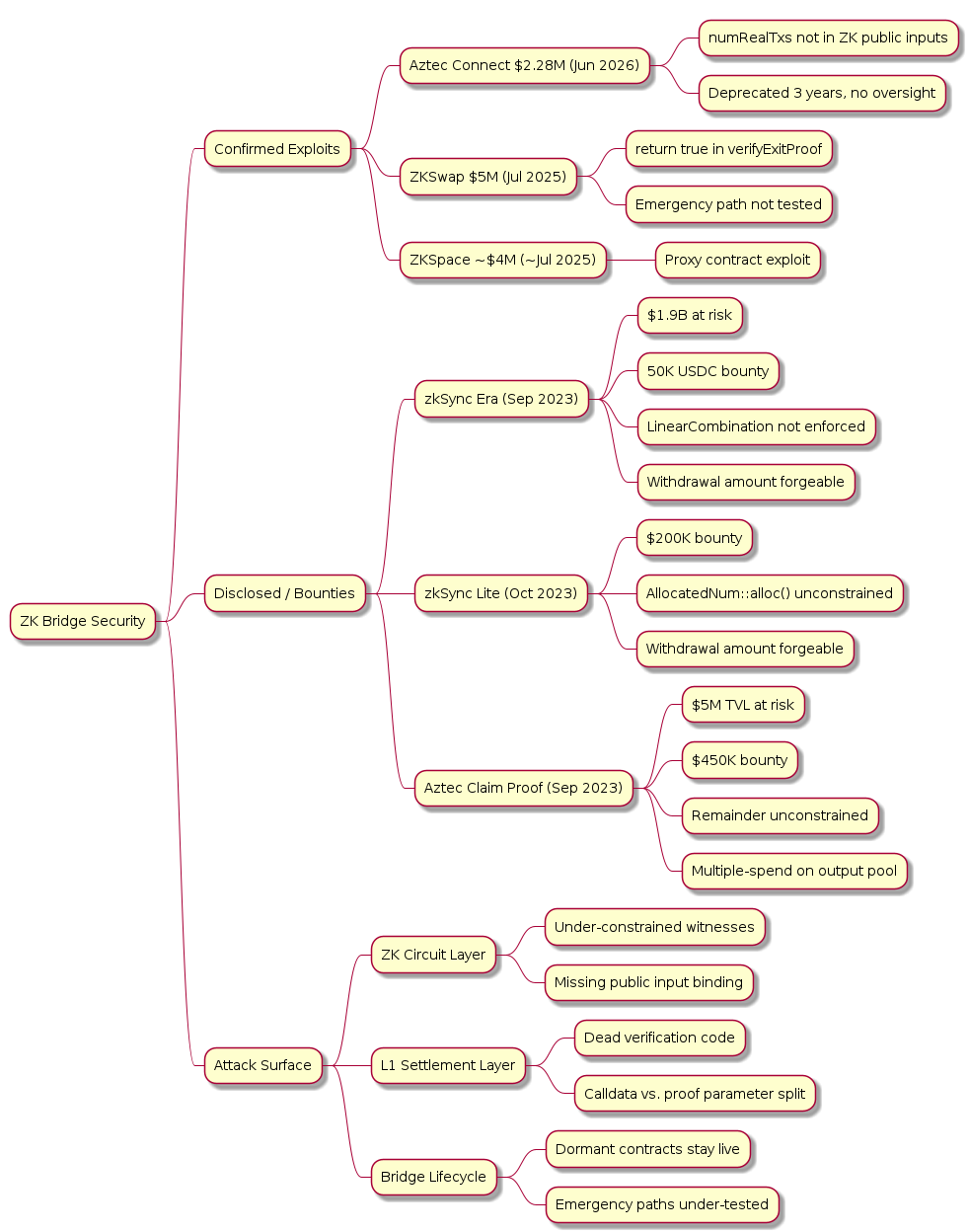
An analysis of security incidents in ZK-rollup bridges from 2023 to 2026, covering confirmed exploits, circuit-level vulnerability disclosures, and bug bounties targeting ZK withdrawal and settlement mechanisms.
2026, Jun 19 —
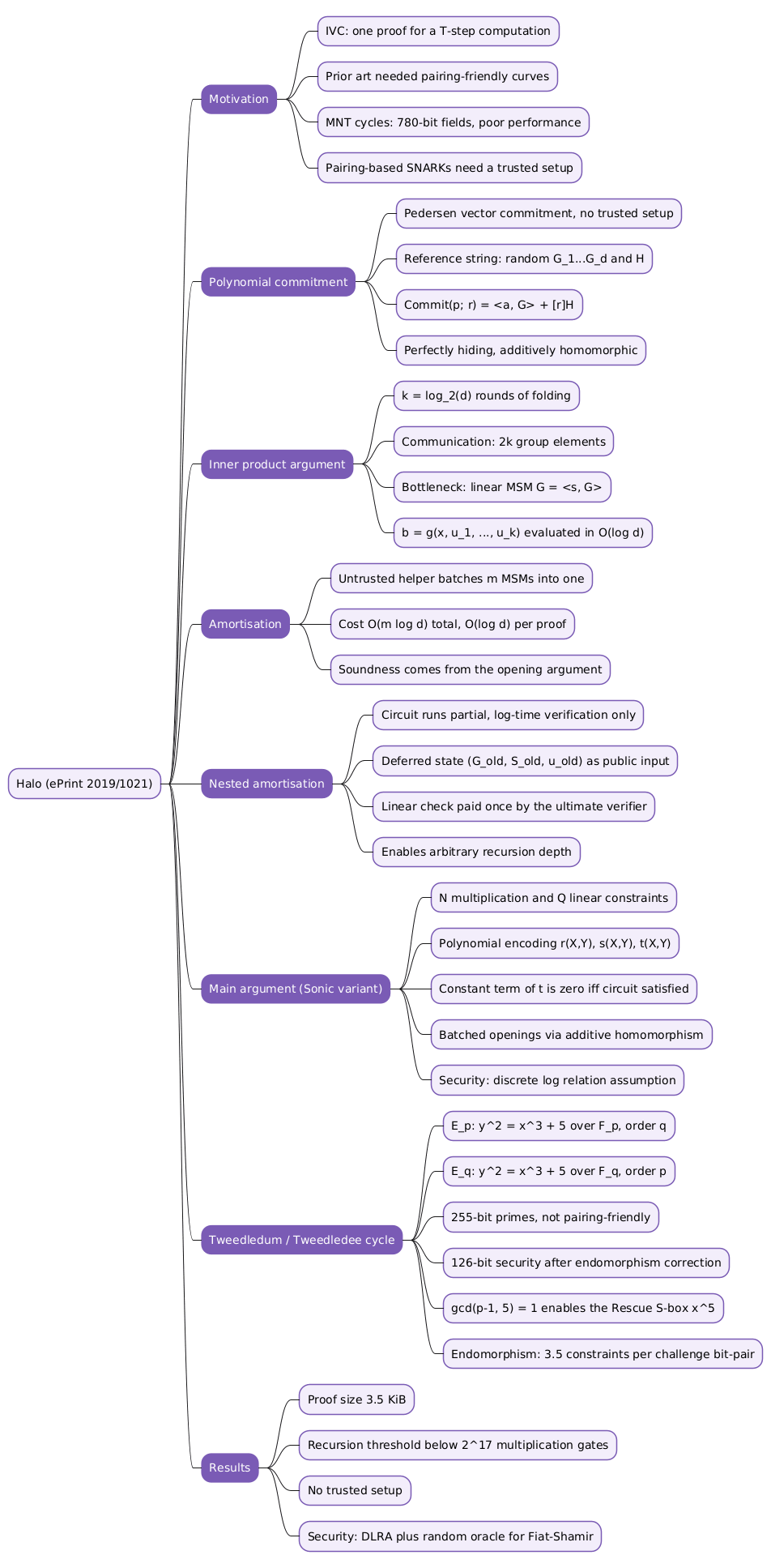
A technical introduction to Halo by Bowe, Grigg and Hopwood. Covers incrementally verifiable computation, amortized polynomial commitments, nested amortization, the Sonic-based main argument, and the Tweedledum/Tweedledee curve cycle.
2026, Jun 19 —
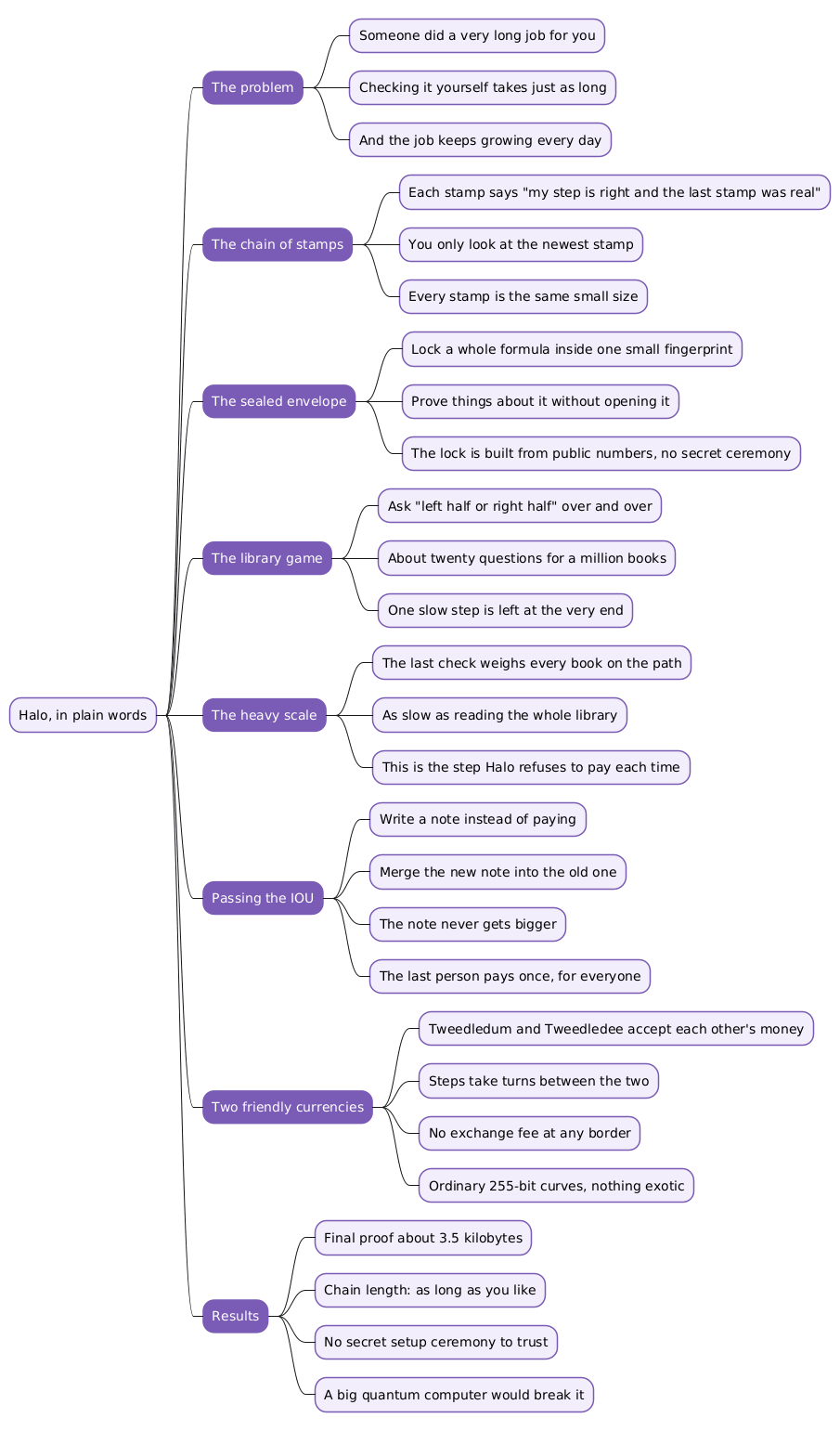
An intuitive guide to Halo, the first system that lets you verify a million steps of computation by checking just one small proof, without trusting any secret setup ceremony.
2026, Jun 19 —
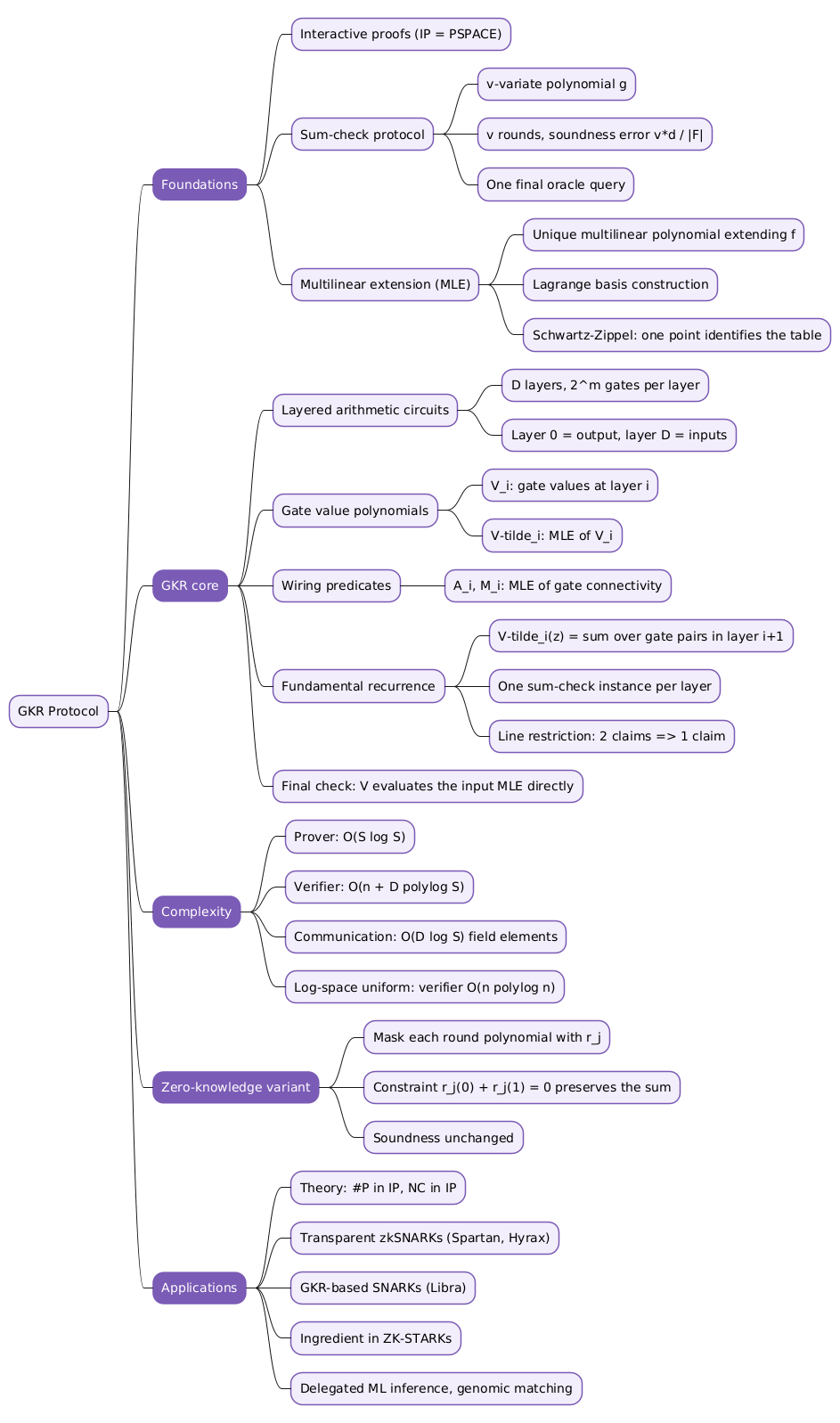
A technical introduction to the GKR protocol by Goldwasser, Kalai and Rothblum. Covers layered arithmetic circuits, the sum-check protocol, multilinear extensions, and the recursive reduction used to build efficient interactive proofs.
2026, Jun 19 —
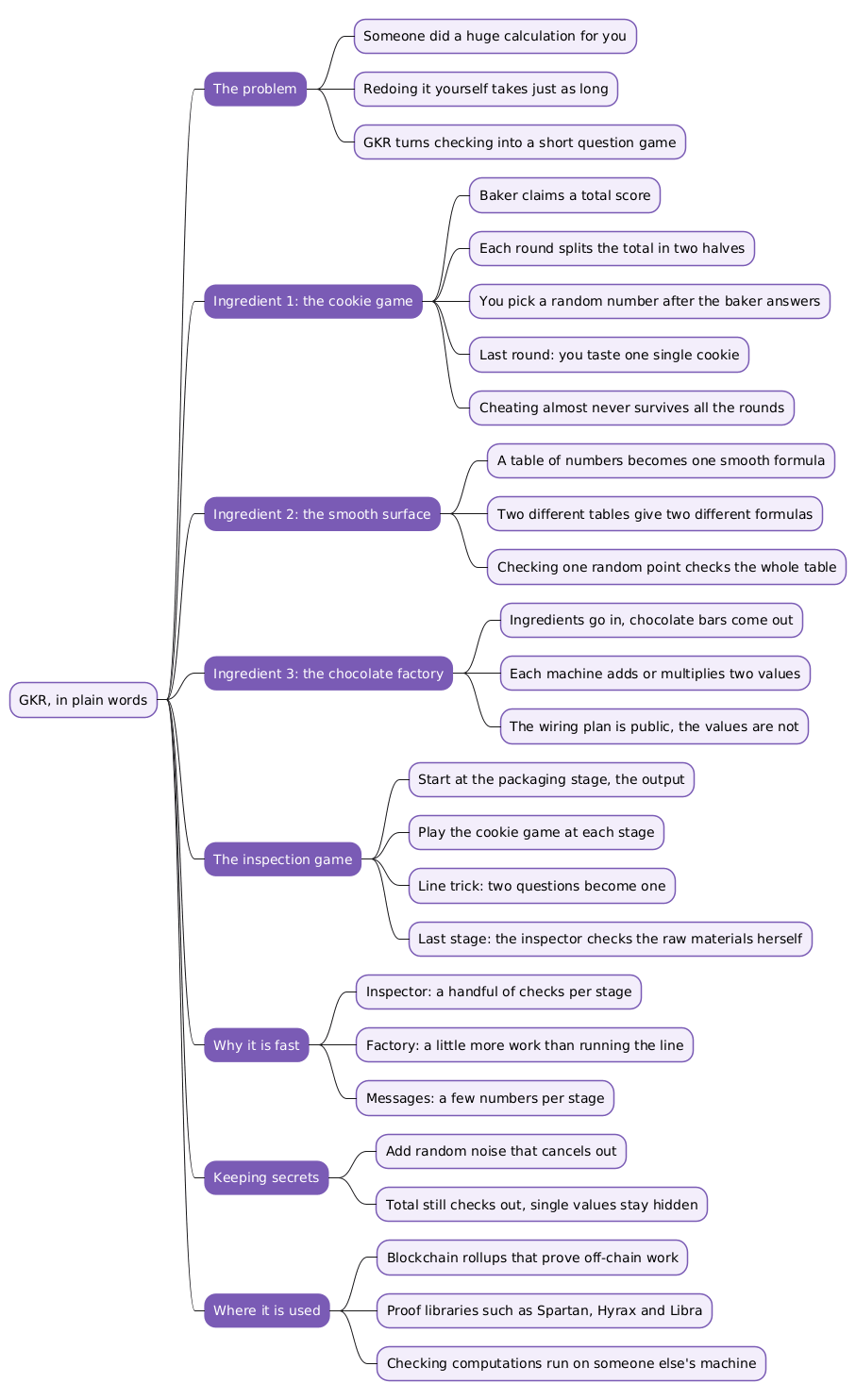
An intuitive guide to the GKR protocol through everyday analogies. Learn how a verifier can check a massive computation by asking a few clever questions, without re-running a single step.
2026, Jun 19 —
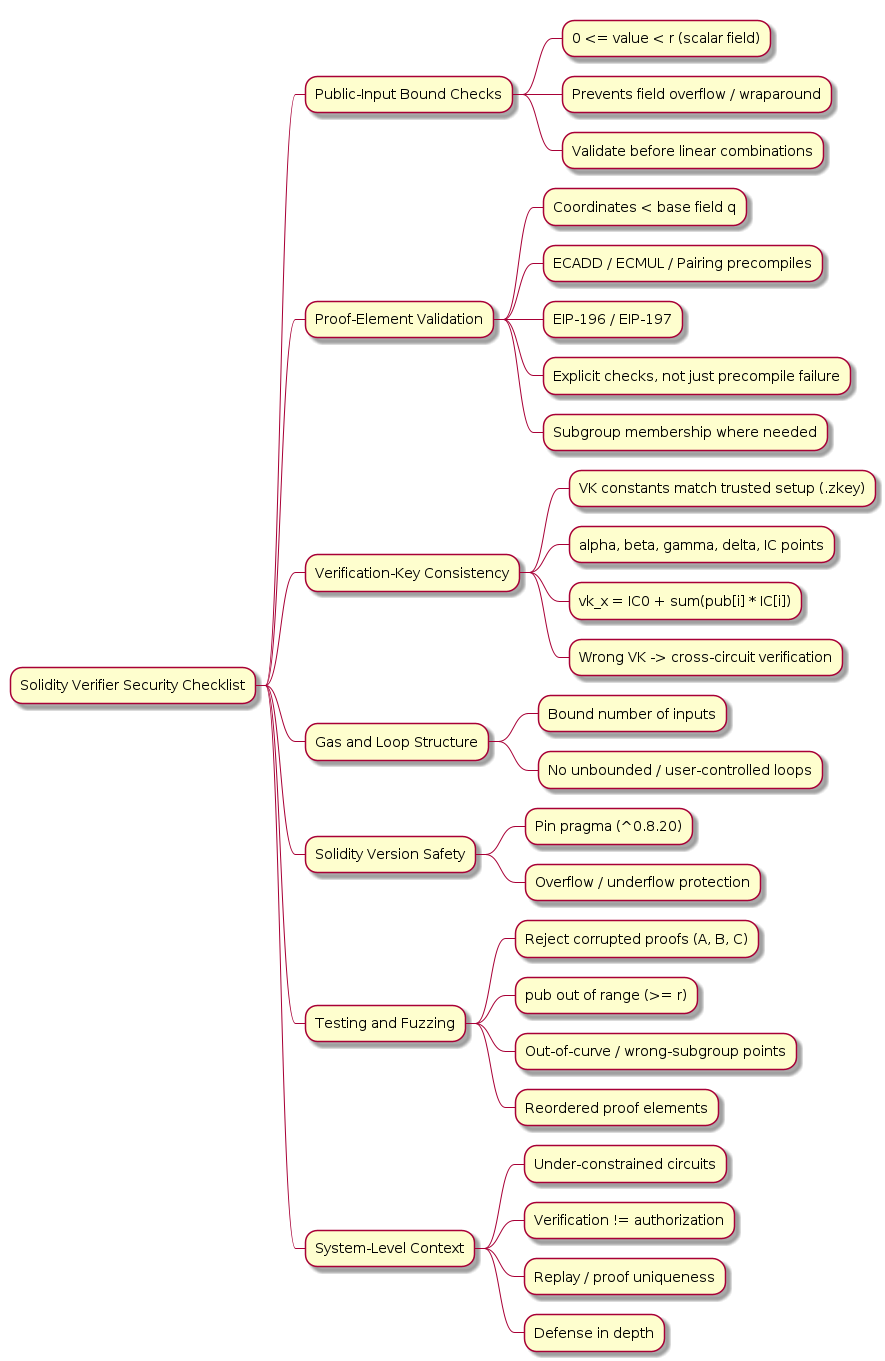
Checklist for reviewing a Solidity zk-SNARK verifier contract: public-input bounds, proof validation, pairing order, verification key and the vk_x sum.
2025, Nov 28 —
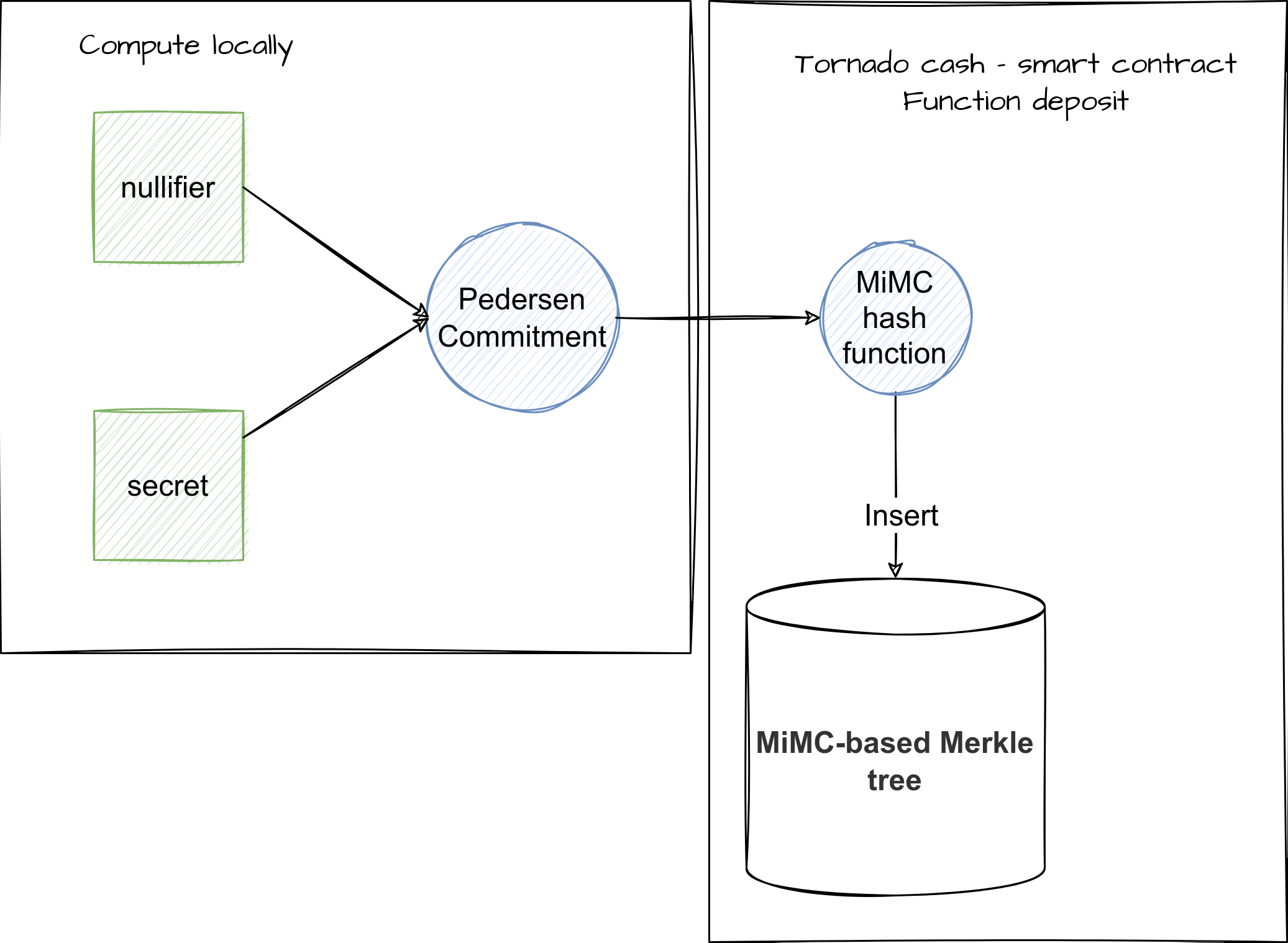
Tornado Cash is one of Ethereum’s pioneering privacy protocols build on zk-SNARK and Circom zero-knowledge circuits.
2025, Nov 19 —

Aztec L2 enables private, composable smart contracts on Ethereum using zero-knowledge proofs and hybrid public/private state.
2025, Oct 29 —

RAILGUN brings full privacy to DeFi using zk-SNARK cryptography, shielding senders, recipients, and tokens for untraceable blockchain transactions.
2025, Oct 28 —

This article explains the cryptography behind zk-SNARKs and compares them to other zero-knowledge proofs like STARKs and Bulletproofs.
2025, Jul 29 —

The Poseidon hash function is a cryptographic hash function specifically designed for use in zero-knowledge proof systems like SNARKs and STARKs.
2025, May 27 —

DECO, the zkTLS oracle from Chainlink: how a prover shows that data came from a TLS server, using commitments, key binding proofs and zero-knowledge proofs.
2025, Jan 13 —

Bulletproofs are efficient and compact zero-knowledge proofs. They're enhancing privacy and scalability in blockchain systems by reducing data size and verification time.
2024, Aug 13 —

This article is a summary of the main concepts behind Zero-Knowledge Proof (ZKP).
2024, Jun 17 —

Overview of the main development frameworks to build zero-knowledge system which Plonky2(Polygon), Halo2(Zcash), Boojum (Matter Labs),...
2024, Jun 10 —