Grover's Algorithm: Quantum Search and Its Real Cost for Symmetric Cryptography
Grover's 1996 search algorithm, from the phase flip and inversion about the average to the iteration count and its real cost against AES and SHA-256.
2026, Nov 06 —Articles whose subject is post-quantum cryptography: the algorithms designed to resist an adversary with a large quantum computer, and the hardness assumptions they rest on. This covers the NIST standards (ML-KEM for key encapsulation, ML-DSA and SLH-DSA for signatures), the lattice problems behind them such as SIS and Module-LWE, and hash-based one-time signatures like Winternitz.
The category also holds implementation walkthroughs of these standards and analyses of how a whole protocol stands against Shor's and Grover's algorithms. An article that only has a section on quantum resistance, within a broader subject, stays in its own category.
12 posts
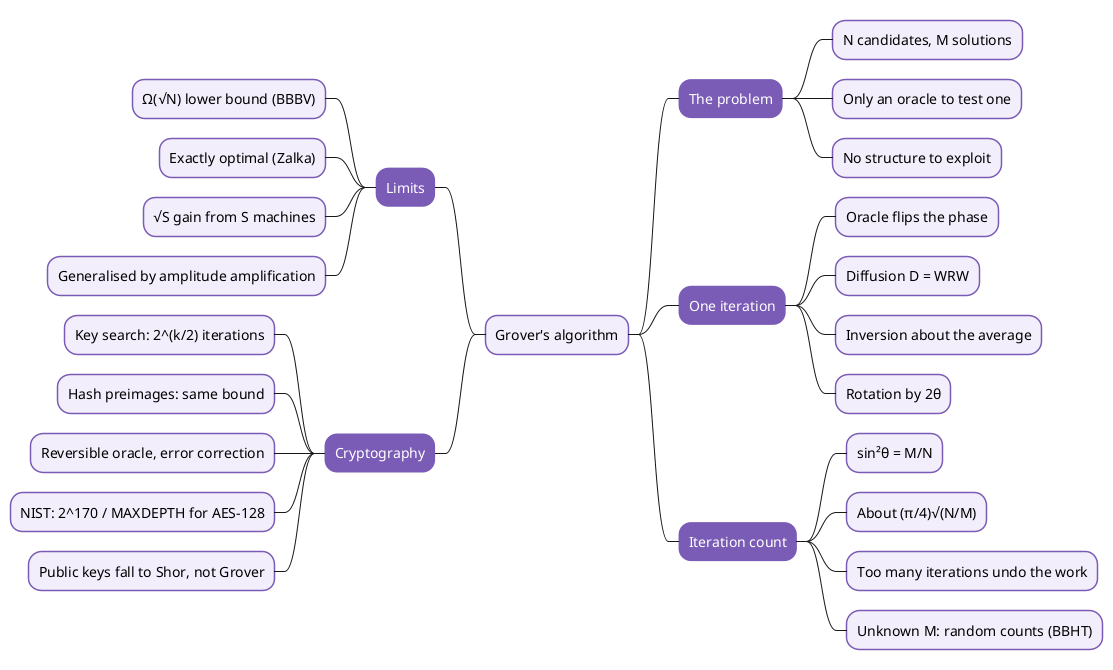
Grover's 1996 search algorithm, from the phase flip and inversion about the average to the iteration count and its real cost against AES and SHA-256.
2026, Nov 06 —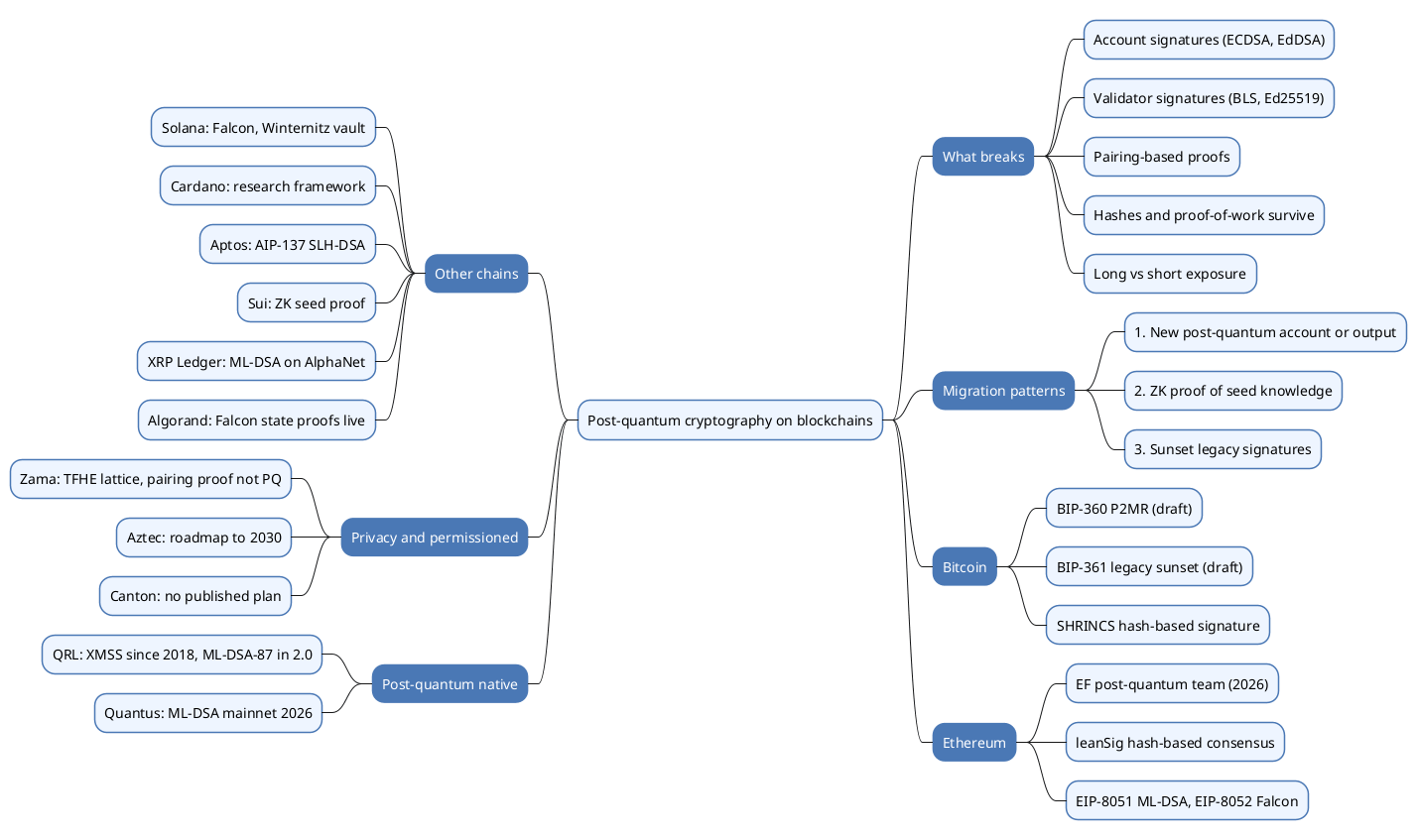
How Bitcoin, Ethereum, Solana, Cardano, Aptos, Sui, XRPL, Zama, Canton and Aztec plan to replace ECDSA and EdDSA, and which chains already run PQ signatures.
2026, Oct 29 —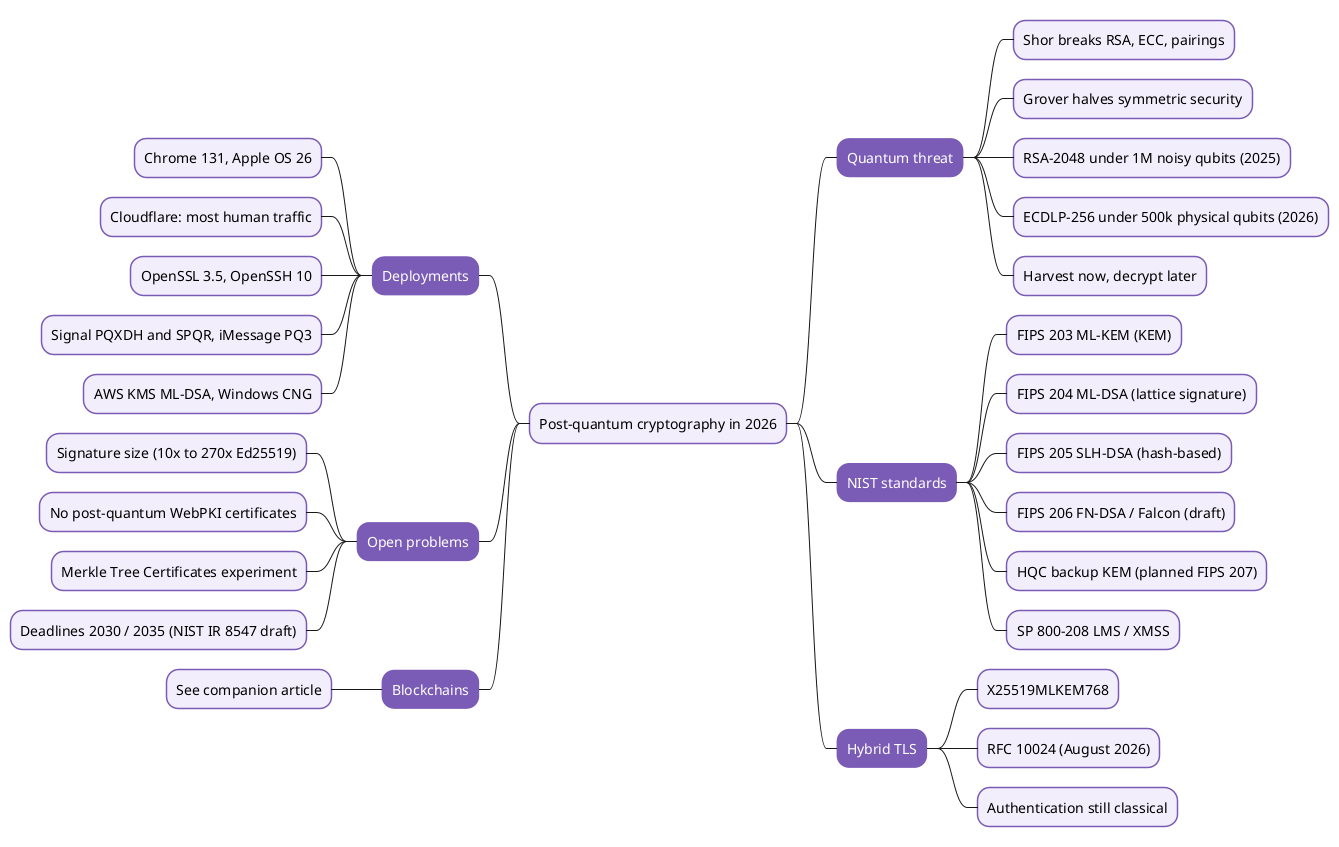
The NIST post-quantum standards ML-KEM, ML-DSA, SLH-DSA and FN-DSA, what each replaces, and where Cloudflare, Google, Apple, AWS and Signal run them in 2026.
2026, Oct 29 —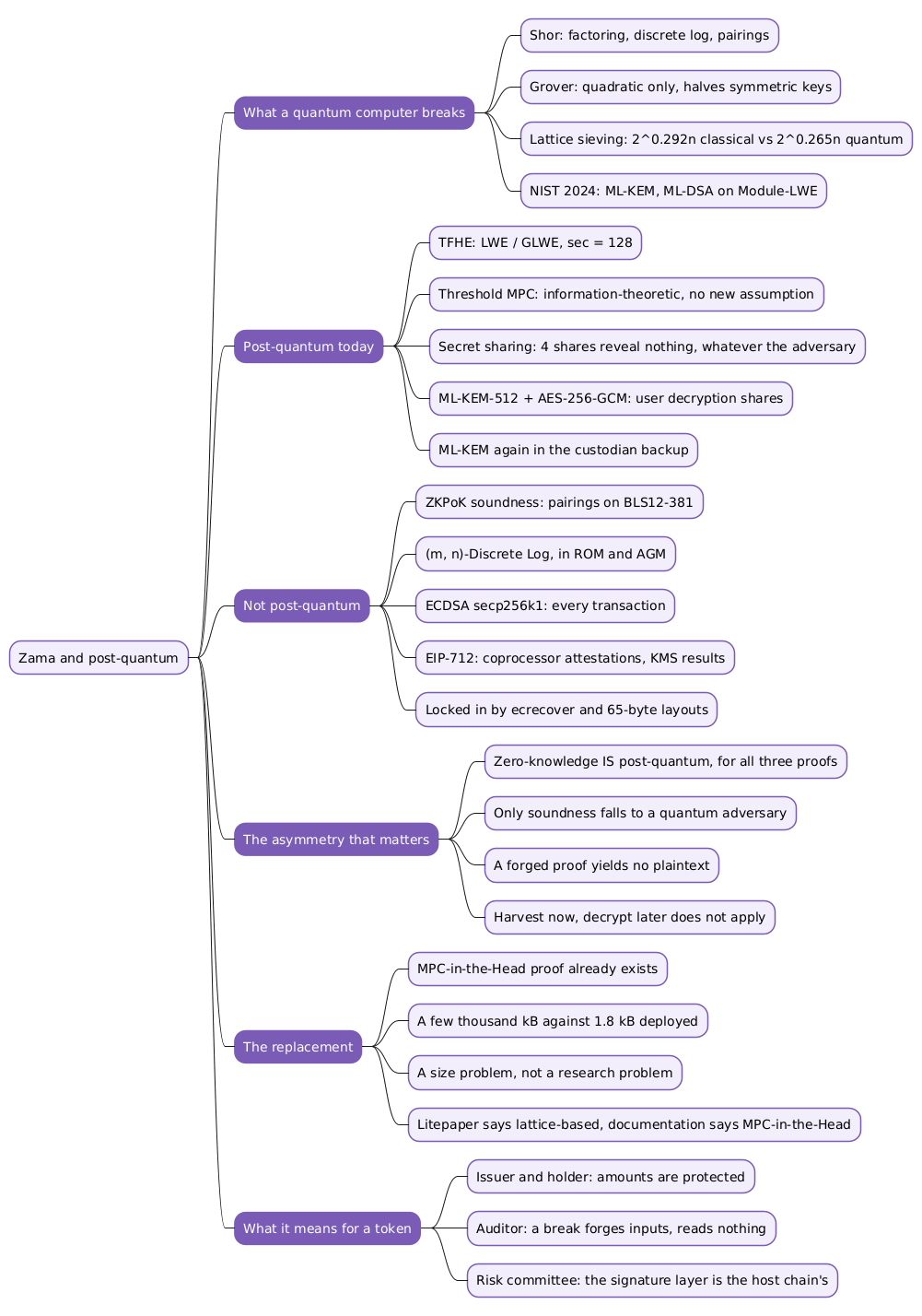
Which parts of the Zama protocol resist a quantum adversary and which do not: TFHE and the threshold MPC stand on lattices and information theory, ML-KEM already ships in production, and the gap is one pairing-based proof plus the host chain's signatures.
2026, Oct 02 —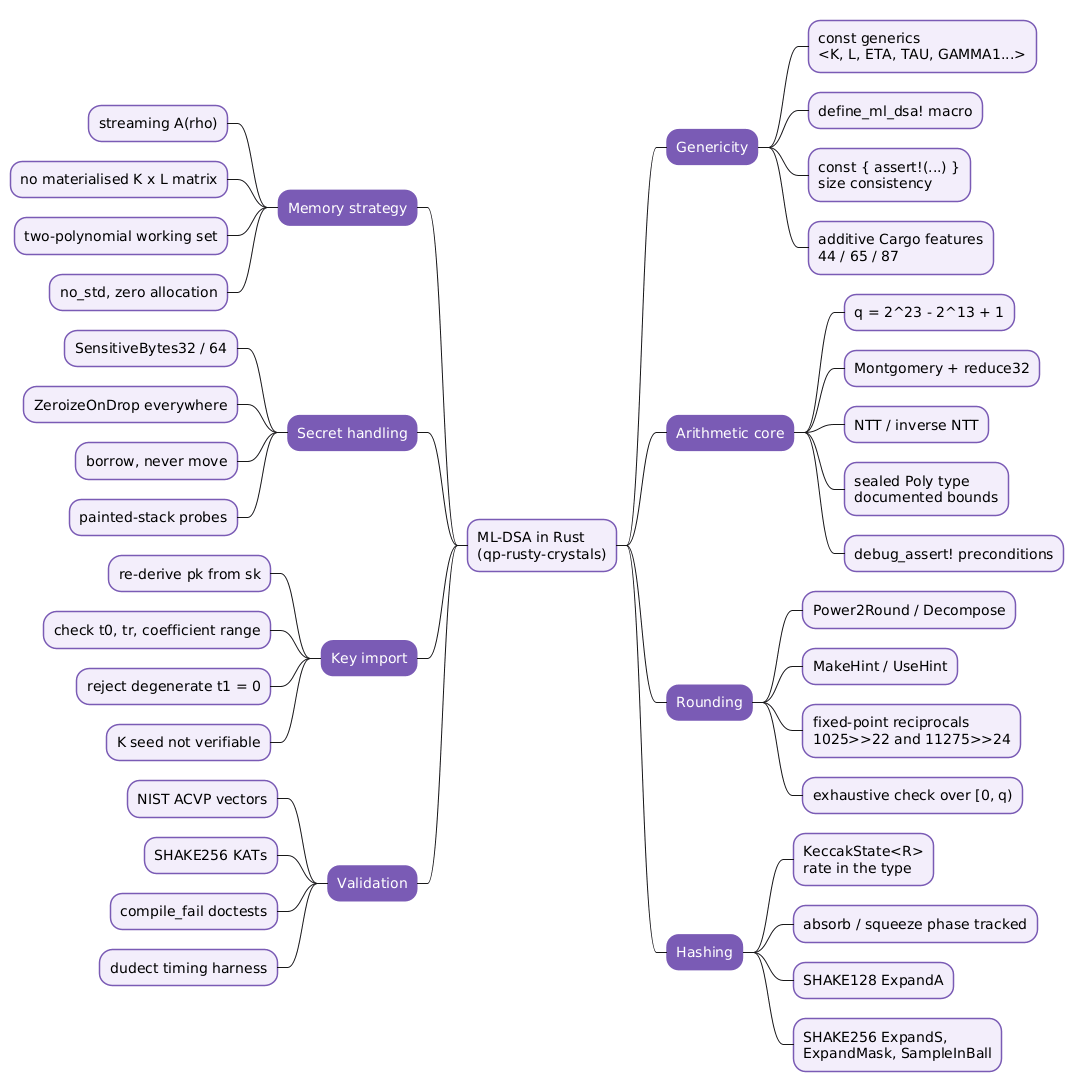
How the Quantus qp-rusty-crystals crate implements FIPS 204 ML-DSA in no_std Rust, from const-generic parameter sets to streaming matrix expansion.
2026, Aug 25 —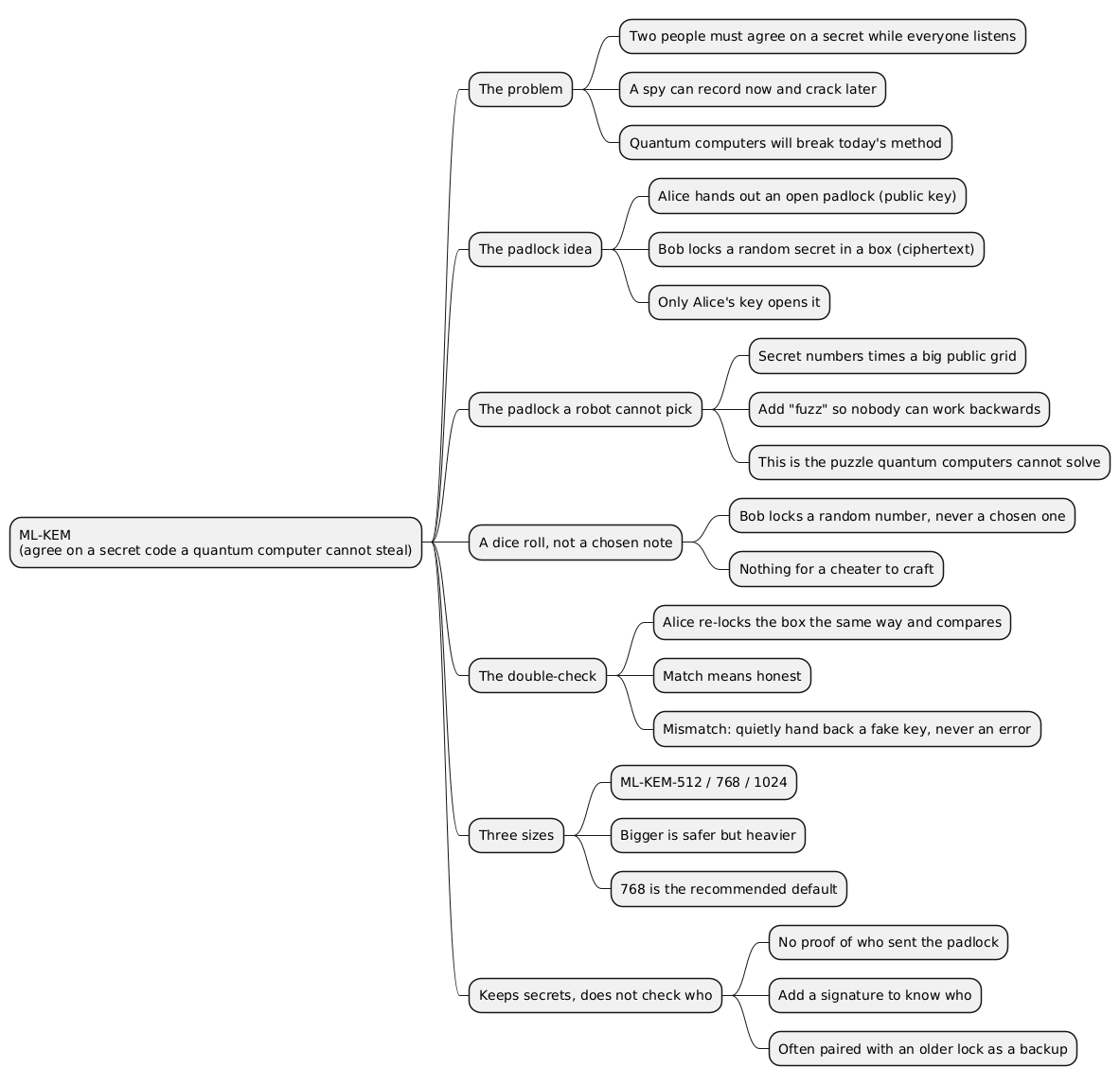
A simple guide to ML-KEM, the new way two computers share a secret code that quantum computers cannot steal, explained with padlocks, locked boxes, and a clever double-check.
2026, Jul 03 —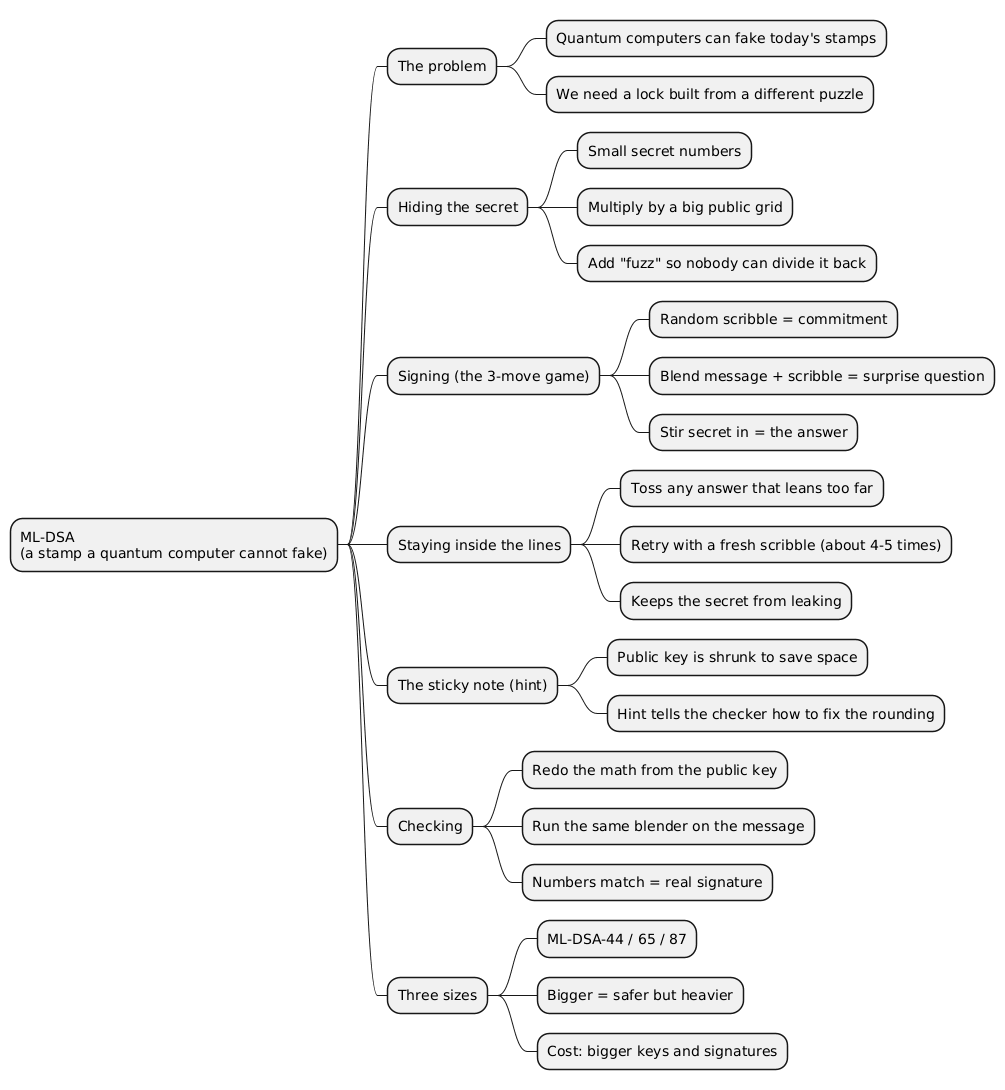
A simple guide to ML-DSA, the new signature that quantum computers cannot fake, explained with everyday analogies about wax seals, secret paint, and drawings that must stay inside the lines.
2026, Jul 03 —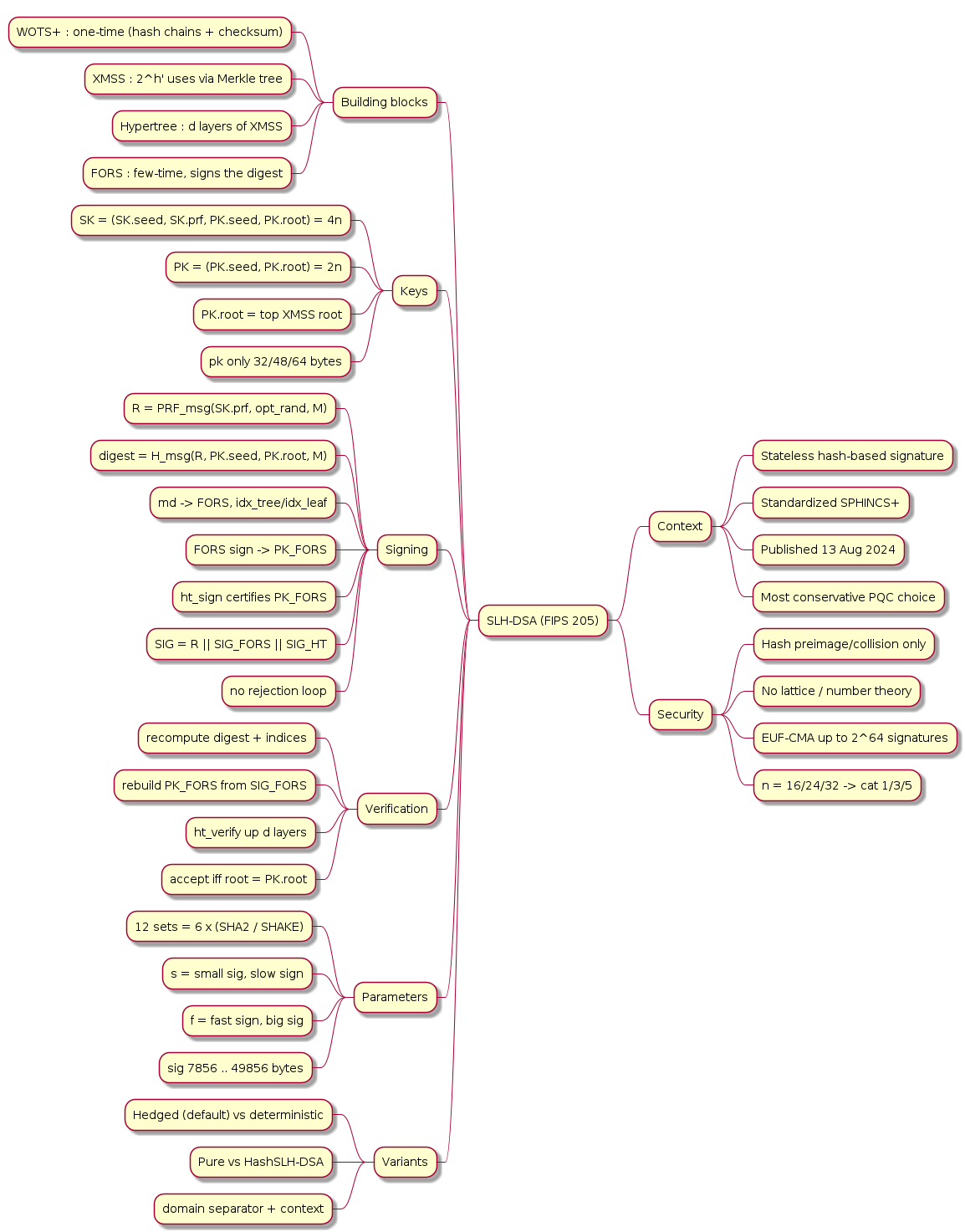
How SLH-DSA (FIPS 205) builds a stateless post-quantum signature from hash functions alone, layering WOTS+, XMSS, a hypertree, and FORS, with the twelve parameter sets and the small/fast trade-off.
2026, Jun 29 —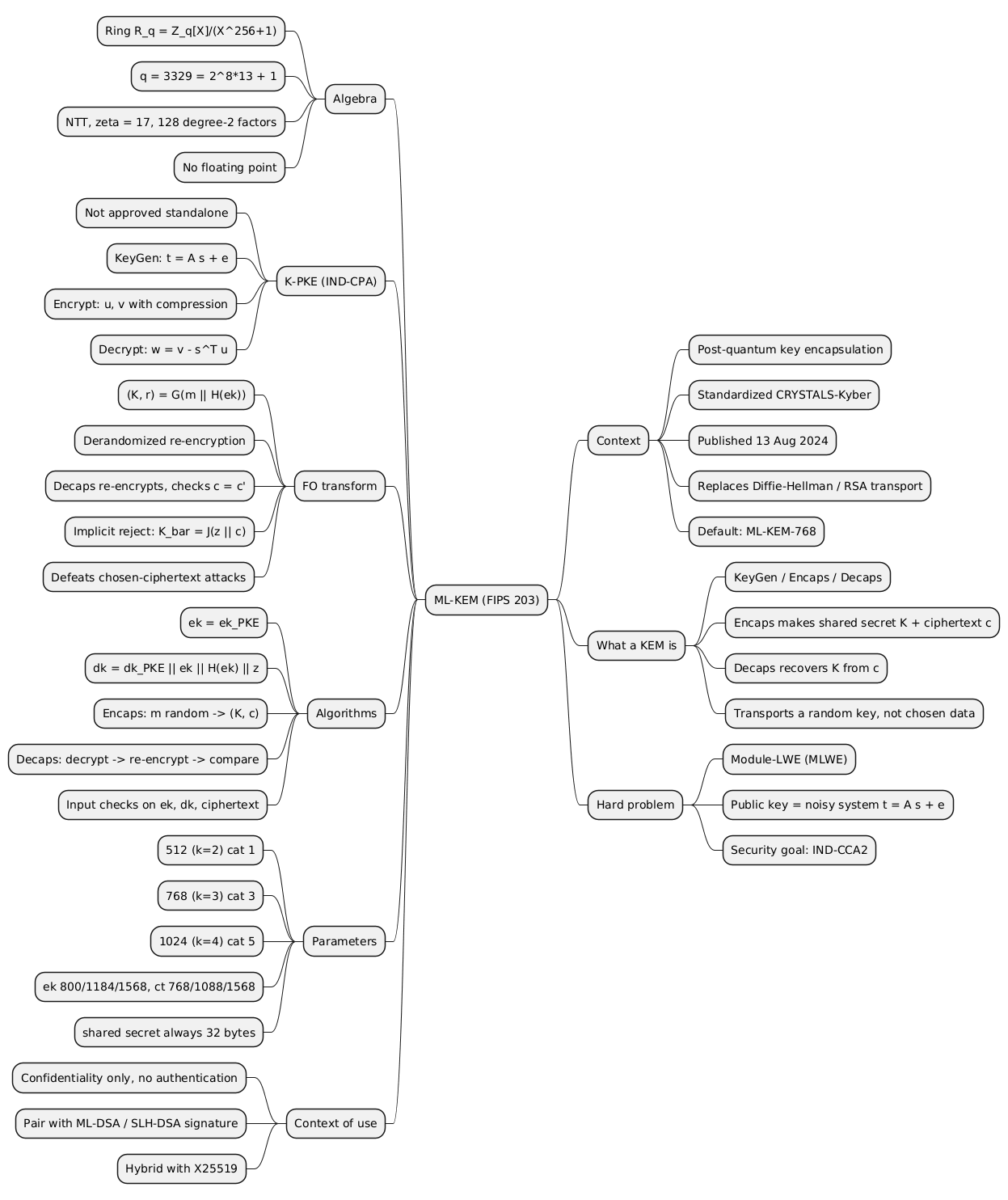
How ML-KEM (FIPS 203) builds a post-quantum key-encapsulation mechanism from module lattices, the K-PKE component, the Fujisaki-Okamoto transform with implicit rejection, and the three parameter sets.
2026, Jun 29 —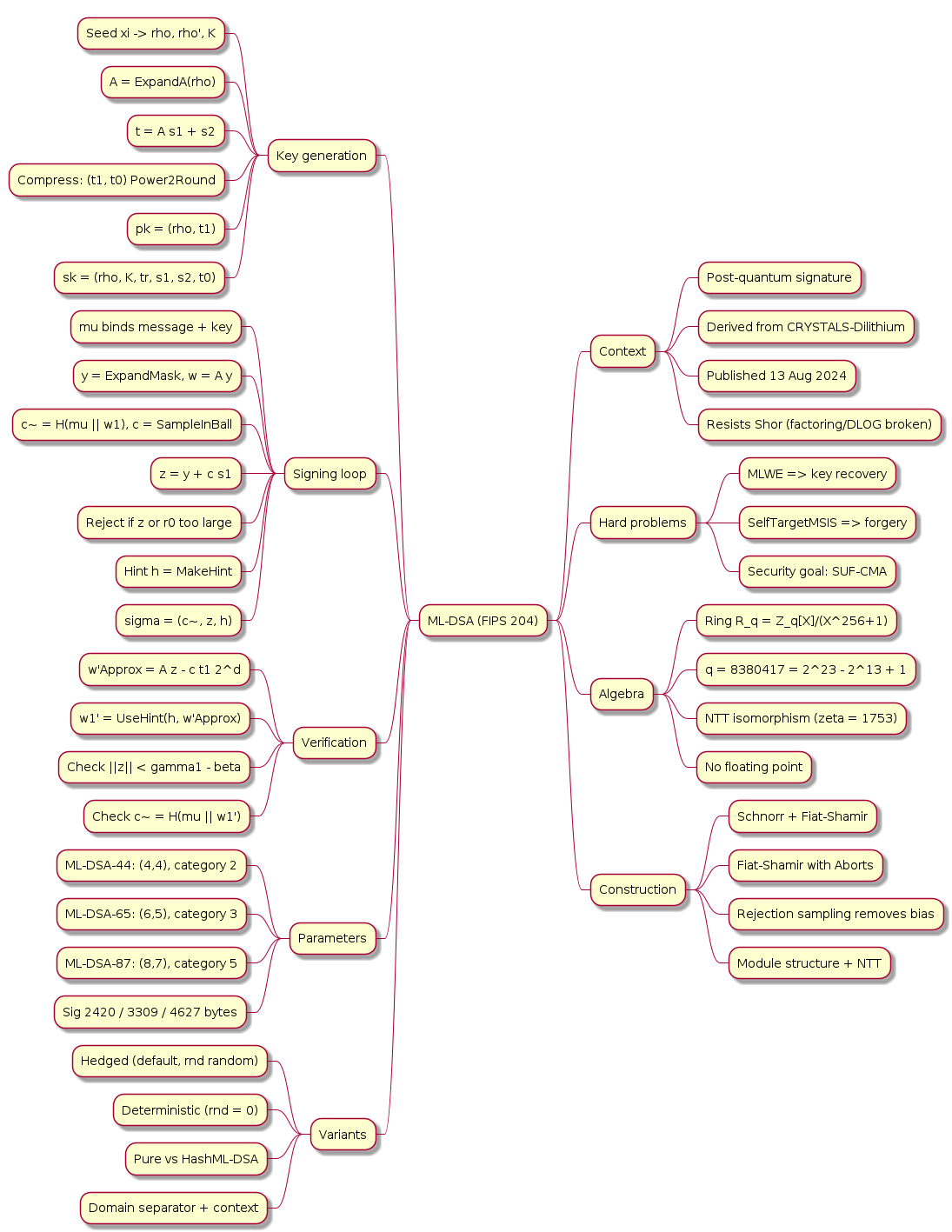
How ML-DSA (FIPS 204) builds a post-quantum digital signature from module lattices, the Fiat-Shamir with Aborts construction, rejection sampling, and the three NIST parameter sets.
2026, Jun 29 —
The Short Integer Solution (SIS) problem, an average-case lattice problem with a worst-case hardness reduction, believed hard even for quantum computers.
2025, Apr 23 —
Presentation of Winternitz One-Time Signature (W-OST), a post quantum algorithm which relies on hash function (e.g SHA-256)
2024, May 30 —